
Small machines often fail for a simple reason: the motion guide is too weak, too rough, or too bulky. That leads to poor accuracy, wasted space, and unstable travel. A miniature linear guide solves this by giving compact, smooth, and precise support where every millimeter matters.
A miniature linear guide is a compact linear motion component that uses a small rail and carriage system to deliver precise, low-friction movement in tight spaces. An MGR miniature linear guide is commonly used in compact automation, CNC subassemblies, precision devices, and even a 3D printer where stable travel, small installation space, and repeatable motion are essential.
A miniature linear guide is a compact motion component designed to support straight-line travel in small or space-limited equipment. It usually includes a slim rail, a moving carriage or slider, and internal rolling elements that help the block move smoothly. Compared with larger guide rails, a miniature linear system is built for smaller loads, finer motion, and tighter layouts.
The value of a miniature linear guide becomes clear when installation space is limited. In many compact systems, a standard linear rail may simply be too large. A smaller guide helps designers keep structures light, neat, and efficient while still maintaining good precision and motion stability. This matters a lot in compact automation modules, electronics handling, and instrument-level positioning systems.
From my experience, compact motion components are often underestimated. People focus on motors first. But the guide controls the path. If the rail is poor, even a good drive system can feel rough. A well-made miniature linear solution helps turn a cramped design into a reliable motion system.
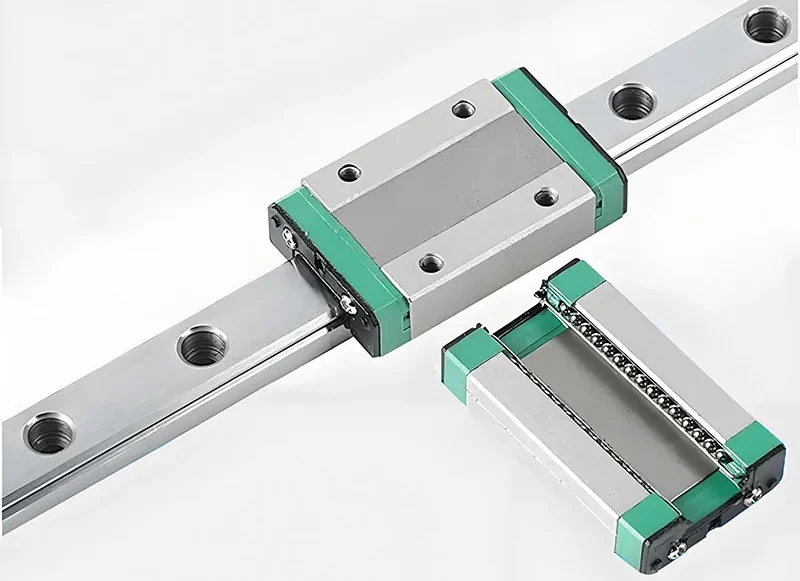
An MGR miniature linear guide works through a supported rail and sliding carriage structure. Inside the carriage, small rolling elements such as steel balls move along a formed raceway. As the block travels, the rolling elements recirculate through the internal path, reducing drag and helping the guide move with low resistance.
This rolling design is important because it lowers friction and helps the system achieve smoother linear motion. Instead of scraping across the surface, the rolling elements circulate and support controlled movement. That gives the guide cleaner travel, steadier response, and better durability in repeated cycles.
Many compact guide systems are designed with two rows of rolling elements to balance size and load support. That design helps the carriage remain stable even in a very compact frame. In short, the mgr format turns a small guide into a practical motion solution for precise travel.
The answer is simple: space and control. A miniature linear guide rail is ideal when you need stable movement in a small machine or subassembly. It offers more compact packaging, lower moving mass, and efficient guidance for applications where a larger rail would waste space or add unnecessary bulk.
A compact guide can also improve system layout. If your design uses a light platform, small actuator, or slim frame, a large guide may create imbalance or reduce usable workspace. A miniature guide helps the engineer fit motion into tighter structures without giving up essential precision.
This is why miniature linear products are often used in electronics platforms, optical devices, and small assembly units. They are not just smaller versions of large guides. They are motion components built specifically for miniaturization, efficient integration, and accurate travel in compact designs.
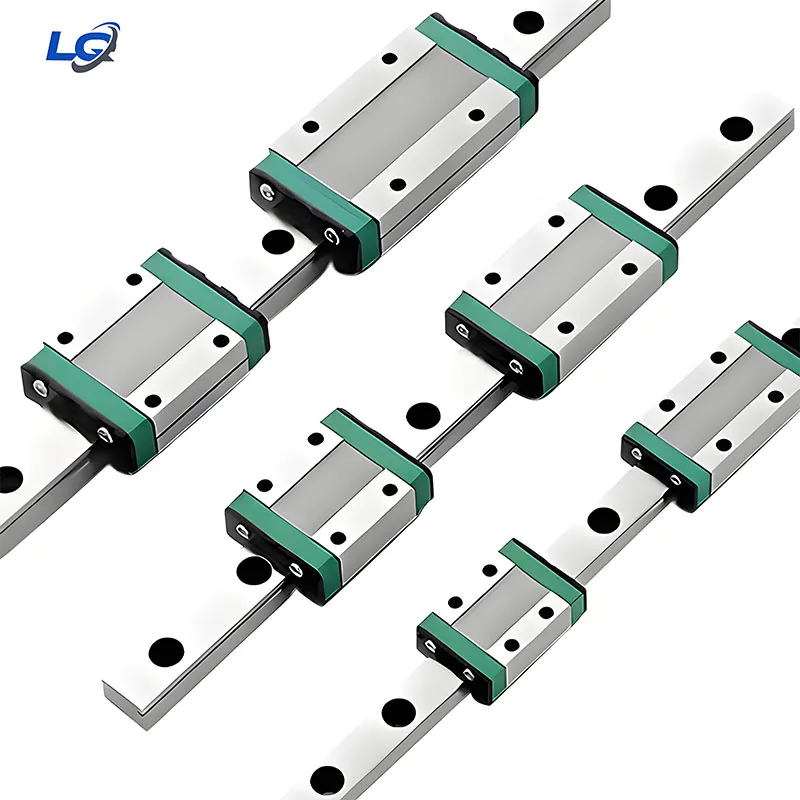
In any guide system, size is not just about fit. It also affects performance. The rail width influences stiffness, stability, and how the load spreads across the guide. A wider or taller compact rail may handle more force, while a slimmer rail can reduce weight and help the system fit tighter spaces.
The slider or carriage design matters just as much. A good compact carriage helps distribute load, keeps movement stable, and reduces the chance of uneven running. In some systems, the bearing block structure is optimized for smoother tracking and better support along the rail. That helps improve precision and makes movement feel more predictable.
For small motion systems, these details are not minor. They directly affect performance. A compact guide with the right rail width, block structure, and internal ball path can deliver high precision in a very small package.
A miniature linear guide is used in many compact motion applications. In automation, it supports sliding platforms, transfer mechanisms, and compact handling devices. In cnc support structures, it helps guide lighter axes or precision subassemblies where full-size guide systems would be excessive.
Typical applications include:
These examples show why a miniature linear guide has such wide applicability. It gives designers a compact answer to accurate movement in space-limited devices.
Yes, and this is where the product becomes especially valuable. In robotics, a compact guide can support lightweight movement in grippers, small travel stages, and mechanical pick-and-place arms. In medical equipment, compact motion is essential because the machine often needs quiet, stable travel in a very limited structure.
In semiconductor handling and ic manufacturing, the need for clean, accurate, and repeatable travel is even more critical. Equipment in these sectors often depends on precise axes with small footprints. A compact miniature linear system helps support that level of controlled movement.
The same logic applies to industrial robots, measurement tools, and precision measuring devices. In all of these systems, the guide is designed to make motion small, smooth, and dependable.
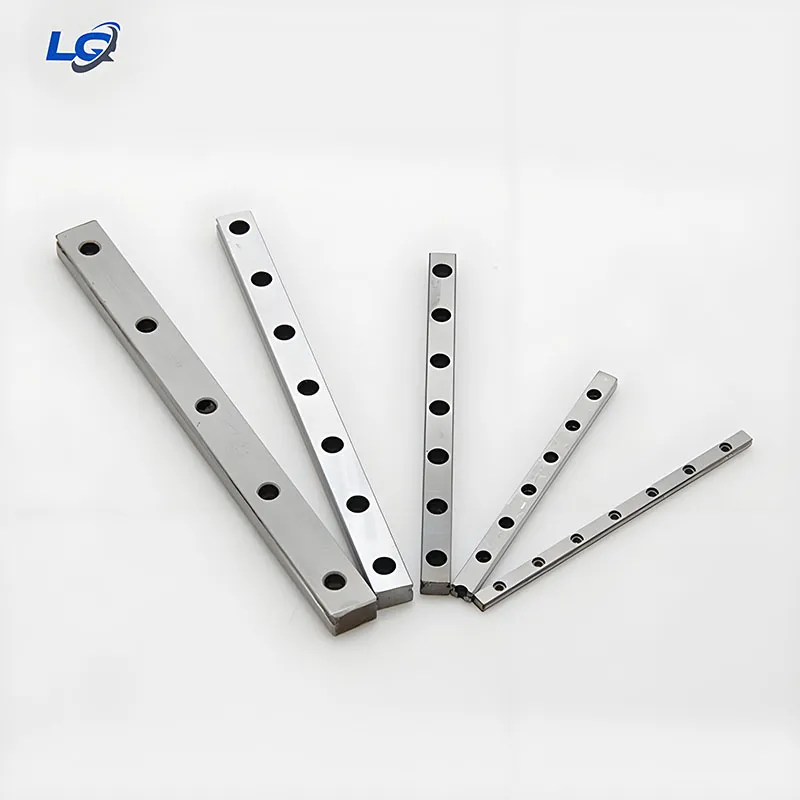
Compact size does not mean light-duty quality. A strong miniature linear guide should also be built for durability. That is where surface treatment, material selection, and corrosion protection become important. Good treatment helps the rail resist wear, improves finish quality, and supports longer-term travel stability.
Some products may use black coating for appearance, added protection, or surface performance depending on the application. Others focus on anti-rust or corrosion resistance for use in more demanding environments. A stable steel structure with proper finish helps the guide stay consistent over time.
This matters because the guide’s service life depends on more than rolling design alone. Surface quality, lubrication, and protection from contamination all affect long-term performance. A wear-resistant guide with the right finish will usually hold its motion quality longer.
Even a small guide needs the right lubrication strategy. A lubricant reduces internal wear, supports smoother travel, and helps the rolling parts move cleanly through the guide. When lubrication is poor, the guide may lose smoothness, wear faster, or become noisy.
Some systems include grease nipples to make maintenance easier. Others are designed around self-lubrication features or compact lubrication paths. In practical machine design, easy lubrication can be a major benefit because it reduces maintenance time and helps protect long-term motion quality.
For buyers of compact guide systems, lubrication should always be part of the selection process. It is one of the easiest ways to protect service life, keep linear motion smooth, and reduce avoidable wear inside the guide.
The best choice starts with the application. Buyers should first look at load, speed, stroke, and available installation space. Then they should compare rail width, carriage size, travel distance, and the guide’s ability to fit the frame or mounting pattern. For compact machines, even a small size difference can affect the whole layout.
A practical buying checklist includes:
This is also where working with manufacturers and suppliers in china can make sense for global buyers. A strong supplier can help match the right guide model to the real application rather than just offering a generic size list.
A guide system is usually one part of a larger axis. A miniature linear guide may work with a compact screw drive, a high-speed belt drive, or a small motor-based stage. In many maker and light industrial designs, it may even be paired with a nema 17 motor for simple, compact movement.
When the guide works with a screw-driven system, such as a small ball screw
, the screw provides thrust while the guide controls direction. When paired with a belt-driven platform, the guide supports stable tracking at higher travel rates. That is especially useful in high-speed transmission equipment or small gantry-style systems.
LONGQIAO’s broader product range gives buyers more flexibility here. A customer can source miniature guide rail products, ball screw solutions, linear guide systems, and servo motors and drivers from one partner, which helps simplify design planning and supply management.
For many buyers, the product is only half the story. The other half is supply reliability. OEMs, distributors, and integrators want stable quality, fast delivery, and easier purchasing. That is why LONGQIAO’s one-stop supply model is useful. The company supports compact motion components together with standard CNC transmission parts, making multi-part sourcing more efficient.
This matters even more for overseas buyers working on tight deadlines. Compact guide systems are often part of a larger machine bill of materials. If the guide is delayed or mismatched, the whole assembly may stop. A supplier that understands the full motion chain can help reduce those risks.
From a B2B point of view, this is one of LONGQIAO’s strongest advantages. It is not only selling one rail product. It is supporting motion design, purchasing efficiency, and long-term supply for global machine builders.
A miniature linear guide is used for compact linear motion in equipment that needs accurate travel in a small space. Common applications include automation devices, precision instruments, small platforms, and electronics-related systems.
Yes. An MGR miniature linear guide can be suitable for a 3d printer or similar compact motion platform when the design requires smooth, stable travel and small installation size.
Rail width refers to the width of the guide body. It affects stiffness, installation size, and how much load the guide can support in a compact system.
Lubrication reduces wear, supports smoother movement, and helps extend service life. Features like grease nipples or self-lubrication can make maintenance easier.
Yes. They are commonly used in robotics, medical equipment, and compact precision systems where space is limited but motion quality still matters.
Choose a miniature linear guide when the machine has limited space, lighter loads, or compact motion needs. Choose a larger guide when higher load and larger structure support are required.