
Struggling with inaccurate positioning, backlash, or short service life in CNC and automation machines? Many OEMs face unstable linear motion and frequent maintenance caused by poor transmission components. A high-quality ball screw system solves this with smooth motion, high precision, and long service life.
A ball screw converts rotary motion into precise linear motion using recirculating ball bearings between the screw shaft and nut. Compared with lead screws, ball screw assemblies provide higher efficiency, lower friction, minimal backlash, and superior positioning accuracy—making them essential for CNC machines, robotics, and industrial automation systems.
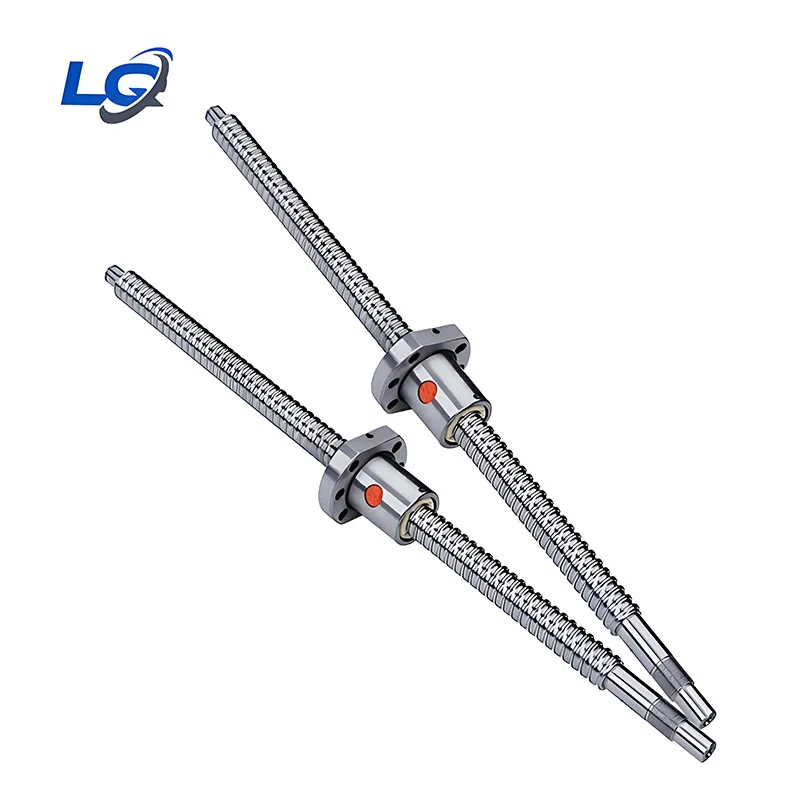
A ball screw is a mechanical linear motion device that converts rotary motion to linear motion through a screw shaft and recirculating ball nut. The screw shaft contains a helical thread raceway. Inside the nut, hardened ball bearings circulate continuously.
When the screw rotates, the balls roll between the screw shaft and nut. This rolling contact reduces friction dramatically compared with a lead screw.
Because the balls recirculate, the ball screw achieves high positional accuracy, smooth motion, and long service life in CNC machines and automation equipment.

Both ball screws and lead screws convert motion to linear motion, but their performance differs significantly.
| Feature | Ball Screw | Lead Screw |
|---|---|---|
| Friction | Rolling (ball bearings) | Sliding |
| Efficiency | 90%+ | 20–50% |
| Backlash | Very low | Higher |
| Precision | High precision | Medium |
| Load capacity | High load | Moderate |
| Service life | Long | Shorter |
| Speed | High | Low |
| Cost | Higher | Lower |
This is why nearly all CNC machine tools use precision ball screws rather than lead screws.
Ball screws offer major advantages over other linear transmission systems.
High Precision Motion
Rolling ball contact ensures minimal backlash and accurate position control. CNC machines rely on this for micron-level positioning.
High Load Capacity
Multiple ball bearings distribute axial load across raceways, enabling high load capacity and rigidity.
High Efficiency
Ball screws operate with 90% efficiency due to rolling friction. Lead screws lose energy through sliding friction.
Long Service Life
Hardened screw shaft and recirculating balls reduce wear. Proper lubrication extends life of ball screw significantly.
Smooth Motion
Rolling balls create low vibration linear movement, ideal for robotics and automation.
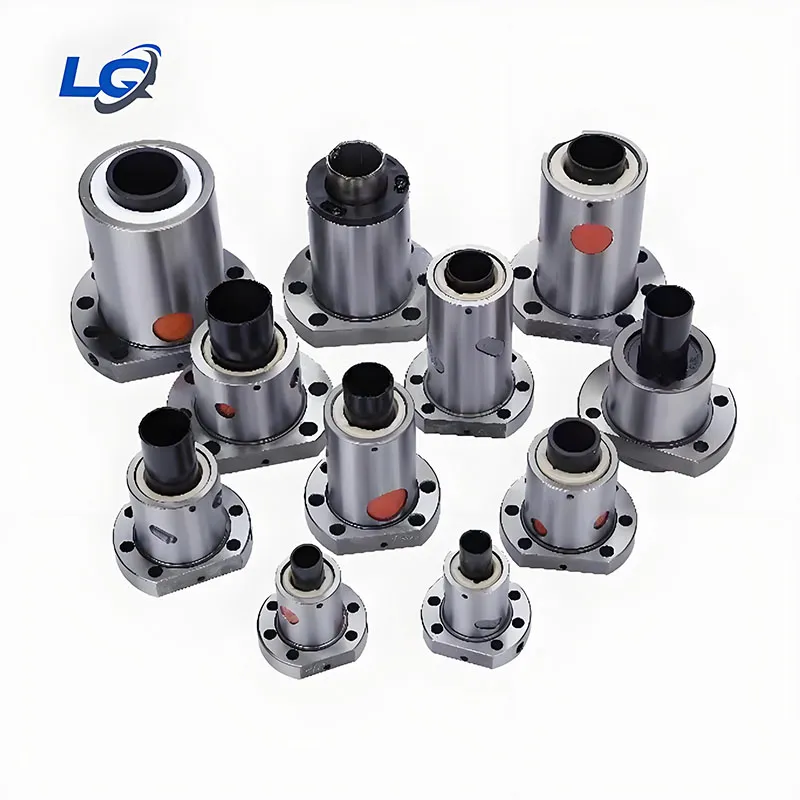
Ball screws are widely used in machinery requiring precise linear motion.
Common applications
%ball screw cnc machine application
CNC Machines
Ball screws control table positioning and axis movement.
Automation Systems
Used in actuators and linear modules.
Robotics
Provide accurate linear positioning in robotic arms.
Ball screw technology enables modern precision manufacturing.
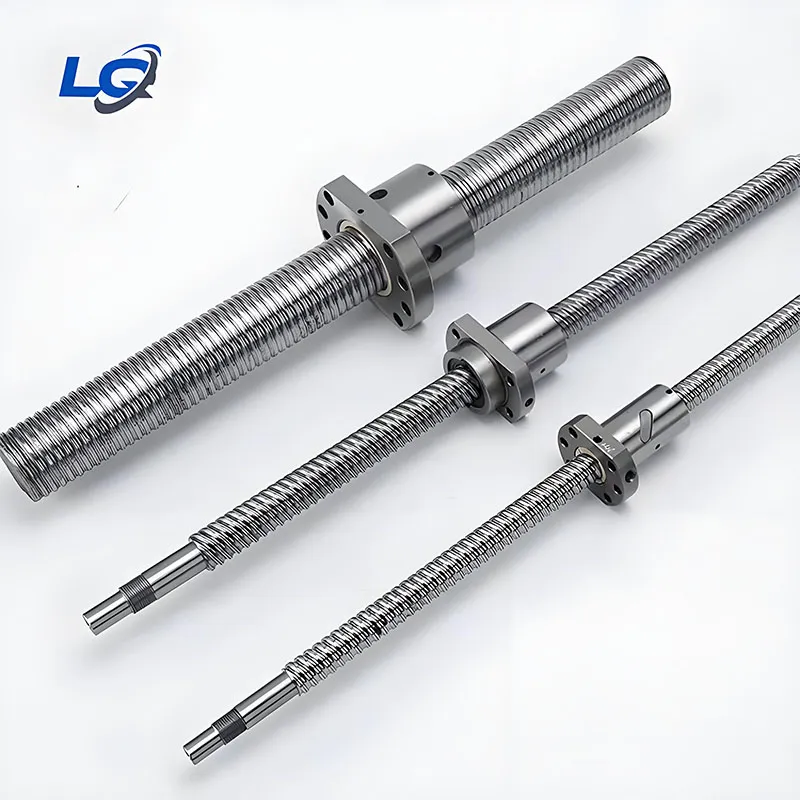
For OEMs and CNC builders, supplier choice is critical.
As a China-based manufacturer of CNC motion components, we supply:
Our overseas customers include:
They choose us because we provide:
A reliable manufacturer ensures long-term machine performance.
What is the difference between ball screw and lead screw?
Ball screws use rolling ball bearings, providing higher efficiency and precision. Lead screws use sliding friction and have lower efficiency.
Why are ball screws used in CNC machines?
Ball screws provide high positional accuracy, low backlash, and smooth linear motion required in CNC machining.
How long does a ball screw last?
With proper lubrication and load conditions, a ball screw can last thousands of operating hours in machinery.
How to reduce backlash in ball screws?
Use preloaded ball nuts, oversized balls, or double nut design to eliminate clearance.