A moving machine axis depends on hundreds of components working together. But cables and hoses are often overlooked. Without the right cable carrier drag chain, cables can twist, rub, break, and cause unexpected machine downtime. Choosing the wrong size, bend radius, or installation method can shorten cable life dramatically.
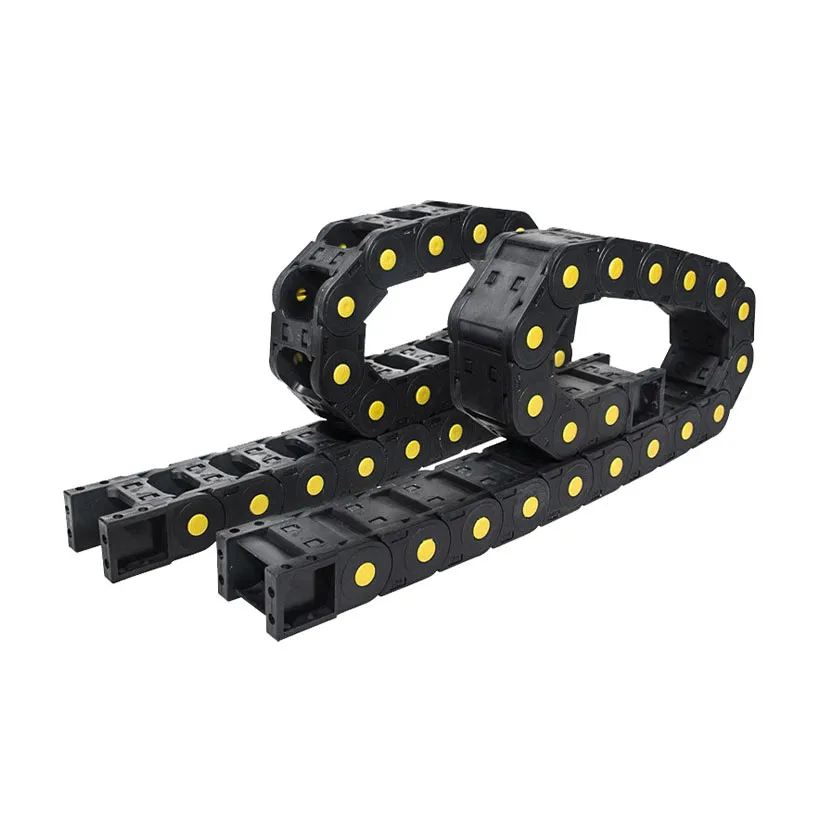
A cable carrier drag chain is an industrial cable management component designed to guide and protect moving cables, wires, hydraulic hoses, and pneumatic tubes during repeated machine movement. It controls bending radius, prevents cable interference, and improves reliability for CNC machines, CNC routers, laser cutting machines, automation systems, and robotic equipment.
A кабеленесущая цепь, also called a cable chain carrier, drag chain cable system, or energy chain, is a flexible protective structure installed on moving machine axes.
Its main purpose is simple:
Guide moving cables safely while allowing repeated motion.
During CNC machining, the carriage, spindle, or cutting head may move thousands or millions of cycles. Power cables, signal cables, air tubes, and hydraulic hoses must move together without excessive bending or pulling.
A properly selected CNC cable carrier provides:
LONGQIAO supplies CNC machine components and automation accessories for global OEMs, distributors, and machine builders. Besides cable carrier systems, LONGQIAO provides motion components including:
These components work together to build reliable CNC machines and automation equipment.
A CNC machine is constantly moving.
The X, Y, and Z axes repeatedly travel forward and backward. During this movement, cables without protection can experience:
Many machine failures are not caused by the motor or controller. They come from damaged cables.
A CNC drag chain creates a controlled path for cables and hoses. Instead of allowing cables to move randomly, the chain forces them to follow a consistent curve.
This is especially important for:
For example, a CNC router may include:
Without a proper cable carrier chain, these lines may interfere with machine movement and reduce operating reliability.
Before selecting a drag chain cable carrier, machine builders should first confirm the movement type and installation direction.
The wrong chain style can create problems even if the size looks correct.
The main selection factors include:
| Selection Factor | Question |
| Movement direction | Horizontal, vertical, rotating, or multi-axis? |
| Travel distance | How far does the axis move? |
| Cable quantity | How many cables and hoses are inside? |
| Диаметр кабеля | What is the total cable size? |
| Окружающая среда | Chips, coolant, heat, dust, chemicals? |
| Скорость | How fast does the machine move? |
| Cycle frequency | How many movements per day? |
Common cable carrier structures include:
Open Cable Carrier
Open style chains allow easy cable installation and maintenance.
Advantages:
Common applications:
Enclosed Cable Carrier
An enclosed drag chain protects cables from:

The material choice affects weight, durability, noise, and application range.
| Характеристика | Plastic Drag Chain | Metal Drag Chain |
| Материал | Nylon / engineering polymer | Steel or aluminum |
| Вес | Lightweight | Heavier |
| Noise | Lower noise | Higher noise |
| Скорость | Suitable for high-speed movement | Suitable for heavy loads |
| Окружающая среда | General CNC applications | Heat, chips, harsh environments |
| Техническое обслуживание | Easy link replacement | More robust structure |
Plastic Drag Chain
A plastic drag chain is widely used because it is lightweight and economical.
Преимущества:
For CNC routers and engraving machines, nylon cable carrier systems are often preferred because axis movement is fast and frequent.
Metal Drag Chain
A metal drag chain is designed for demanding environments.
It is suitable for:
Compared with plastic chains, metal systems provide stronger mechanical protection.
The most important rule:
The cable carrier bend radius must match the cable and hose requirements, not just the chain size.
Every cable has a minimum bend radius.
If the cable bends too tightly:
The smallest cable bend radius in the bundle determines the minimum required drag chain radius.
For example:
| Component | Minimum Bend Radius |
| Servo cable | 8× cable diameter |
| Signal cable | Depends on manufacturer |
| Hydraulic hose | Usually larger |
| Pneumatic tube | Depends on material |
When selecting a cable chain for CNC, always check:
The chain may look correct during installation but fail after thousands of cycles.
Many cable carrier failures come from overfilling.
The inside space of the drag chain should not be packed completely.
Cables need room to move slightly during bending.
A proper fill ratio helps:
A typical recommendation:
| Приложение | Suggested Fill |
| Flexible cables only | 70–80% |
| Mixed cable and hose | 60–70% |
| High-speed movement | Lower fill preferred |
For example:
If the cable carrier inside height is 30mm, filling it with cables reaching 29mm may create problems.
The cables need clearance.
A larger CNC cable carrier may cost slightly more, but replacing damaged cables after installation is much more expensive.

When several cables share one chain, separators become important.
Without separators:
Separators divide the internal space into independent channels.
They are especially useful for:
Mixed Cable and Hose Applications
Example:
A CNC machining center may contain:
The coolant hose is heavier and stiffer. Without separation, it may damage smaller electrical cables.
Power and Signal Cable Separation
Power cables may create electromagnetic interference.
Separating:
can improve machine stability.
For automation equipment manufacturers, this detail is critical because unstable signals can create difficult troubleshooting problems.
The unsupported span is one of the most important factors when selecting a cable carrier drag chain.
A chain that works well on a short CNC axis may fail on a long-travel machine because the chain itself has a weight limit. When the travel distance becomes longer, the lower section of the chain may start to sag.
This affects:
There are two main installation methods:
| Тип | Описание | Suitable Application |
| Self-supporting drag chain | Chain supports its own weight across a free span | Short and medium travel axes |
| Gliding drag chain | Chain runs inside a support trough or guide rail | Long travel machines |
A self-supporting cable carrier is convenient because it does not require additional support. However, every chain has a maximum unsupported length.
When the chain exceeds this limit:
For long CNC machines, automation lines, and large gantry systems, a support trough is usually the safer choice.

One of the most common installation mistakes is choosing a drag chain cable carrier based only on the cable diameter.
At first, the installation may look perfect.
The cables fit.
The machine moves.
Everything appears normal.
But after thousands of cycles, problems appear:
The reason is simple:
A cable carrier is not only holding cables. It is managing movement.
During bending, cables change position inside the chain. They need space to move naturally.
A correct selection considers:
For machine builders, choosing one size larger is often cheaper than replacing damaged cables after production starts.
Correct installation directly affects service life.
Even a high-quality CNC drag chain can fail early if it is installed incorrectly.
A standard installation process includes:
1. Check Mounting Direction
Confirm:
The moving end should follow the machine axis movement smoothly.
Incorrect mounting may create:
2. Secure Cables Properly
Cables inside the chain should not be pulled tightly.
Leave enough movement allowance.
Incorrect:
Correct:
3. Keep Heavy Hoses at the Bottom
When installing mixed cables and hoses:
Recommended arrangement:
Bottom layer:
Middle layer:
Motor cables
Top layer:
This prevents heavy components from crushing sensitive cables.
4. Install Separators When Needed
Use separators when:
A separator creates independent channels and improves cable management.
A cable carrier chain is widely used in modern industrial equipment because almost every automated machine needs reliable cable movement.
Типичные области применения включают:
CNC Router Drag Chain
A CNC router requires continuous movement of:
A CNC router drag chain protects these lines during high-speed cutting operations.
Common applications:
Laser Cutting Machine Cable Chain
Laser equipment often requires:
A laser cable chain helps protect sensitive components from repeated movement.
Обрабатывающие центры
Large machining centers may include:
A heavy-duty drag chain helps organize these systems.
Robotics and Automation Systems
Industrial robots and automated production lines require flexible cable management.
Applications include:
For automation manufacturers, a reliable cable carrier system reduces maintenance and improves production stability.

When purchasing a cable carrier drag chain, professional buyers should evaluate more than price.
A complete selection checklist:
| Артикул | Questions |
|---|---|
| Chain type | Plastic or metal? |
| Installation | Horizontal, vertical, rotating? |
| Travel distance | What is axis stroke length? |
| Cable load | How many cables and hoses? |
| Bend radius | Does it meet cable requirements? |
| Inner height | Does the cable bundle fit comfortably? |
| Fill ratio | Is there enough clearance? |
| Окружающая среда | Chips, coolant, dust, heat? |
| Скорость | How fast does the axis move? |
| Cycle life | How many movements per day? |
| Support system | Need trough or guide rail? |
For OEM manufacturers, these details directly affect machine reliability.
A properly selected cable carrier improves:
LONGQIAO / LQ is a China-based supplier specializing in CNC machine components and motion control solutions for global customers.
The company serves:
LONGQIAO provides integrated sourcing solutions including:
For machine builders, purchasing multiple CNC components from one supplier can simplify:
Recommended LONGQIAO product resources:
CNC linear guide rail systems for precision motion applications
Ball screw assemblies for CNC linear transmission systems
Servo motor and driver solutions for CNC automation
CNC spindle motor solutions for routers and machining centers
Rack and pinion drive systems for CNC machines
LONGQIAO focuses on:
Factory-Direct Supply
Direct factory cooperation helps customers control purchasing costs and maintain stable supply.
Multi-Component Sourcing
Instead of managing different suppliers for every CNC part, buyers can simplify procurement through one technical partner.
Stable Quality Control
Each component should match machine requirements, including:
A cable carrier and drag chain are two names for the same type of component. Both guide and protect moving cables and hoses on machines.
Choose based on cable quantity, cable diameter, minimum bend radius, travel distance, speed, and environment. Do not select only by the outside diameter of the cable bundle.
Yes, but separators are recommended. Hydraulic hoses are usually heavier and stiffer, so they should be separated from smaller signal cables.
Most applications should avoid filling the chain completely. Leaving clearance allows cables to move freely during bending and reduces wear.
Plastic chains are suitable for most CNC machines because they are lightweight and quiet. Metal chains are better for high-temperature, heavy-load, or harsh environments.
Common reasons include:
The chain selection and installation should be reviewed before replacing the entire system.