
When a CNC machine loses speed, shakes on long travel, or struggles with heavy loads, the real problem is often the transmission system. A weak drive setup can limit accuracy, reduce stability, and slow production. The right rack and pinion system solves this by delivering rigid, fast, and reliable linear motion.
A system converts rotary motion into precise linear motion by meshing a rotating pinion with a straight rack. In CNC machines and automation equipment, it is widely used for long-travel, high-speed applications because it offers strong load capacity, good rigidity, and more stable motion over large working distances than many belt-driven or long-stroke screw-based systems.
A rack and pinion system is a precision transmission setup that changes rotational input into straight-line travel. The pinion is the rotating gear. The rack is the straight toothed element. When the pinion turns, it pushes the rack forward or backward. That simple motion principle makes the system practical for large CNC structures and automation axes.
In industrial use, the goal is not to steer a vehicle. It is to move a gantry, carriage, or axis accurately across long distances. This is why a rack and pinion design is common in CNC routers, plasma cutting systems, and automation lines. It gives the machine a stable transmission path for long-stroke movement where a different drive may become less practical.
I usually explain it like this: a motor turns, the pinion rotates, and the rack moves the machine axis. That direct relationship is the reason rack and pinion remains one of the most trusted long-travel motion solutions in industrial equipment.
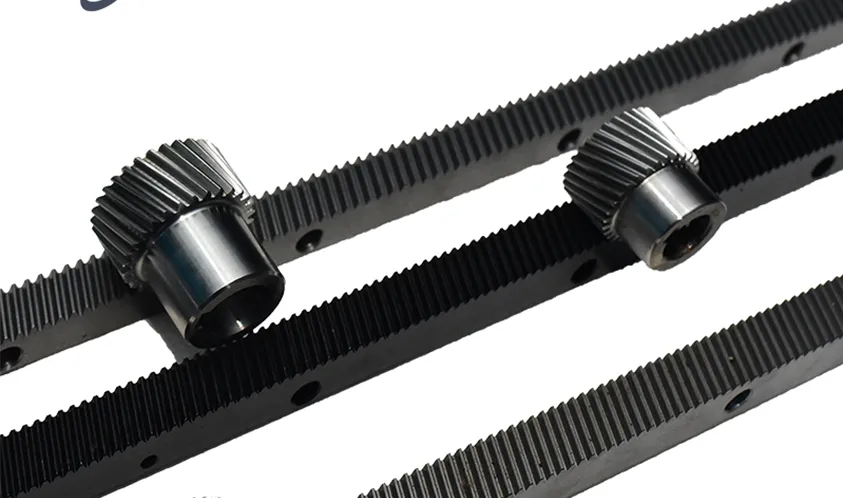
The working principle is simple, but the engineering quality behind it matters a lot. The motor drives the pinion, and the pinion engages the tooth surface on the rack. As the gear turns, the rack translates that rotation into precise linear movement along the axis.
LONGQIAO’s category content emphasizes precision-ground teeth and high-quality materials. That matters because tooth quality directly affects backlash, vibration, and motion stability. If the teeth are not accurate, the axis may shake, lose position quality, or wear too quickly.
In practical terms, the better the meshing between rack and pinion, the smoother the movement. A good system reduces unnecessary vibration and helps the machine maintain better machining quality at high speeds and under continuous operation.
Long-travel applications are where rack and pinion really stands out. The category page directly highlights large-format CNC machines, heavy-duty automation, and stable motion over long distances as key use scenarios. That is because the system scales well across longer working areas.
A long CNC gantry needs a transmission method that can keep motion stable from one end of the machine to the other. This is where the rack offers a clear advantage. Instead of depending on one long rotating screw, the machine can use a rigid linear transmission path that is easier to adapt to wide tables and long strokes.
For example, woodworking routers, plasma tables, and large cutting systems often need both speed and travel length. A properly selected rack and pinion design supports that combination very well, especially in heavy-duty machine frames where stable long-distance motion matters as much as raw speed.
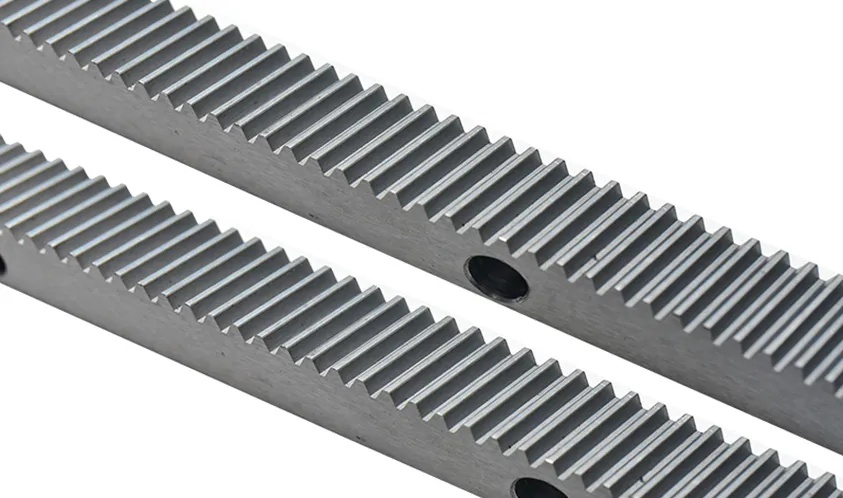
LONGQIAO emphasizes stable quality and high precision, including precise machining, strict inspection, low backlash, and reliable long-term performance. These are not marketing extras. They are core technical factors in whether the transmission system will run well in real production.
Low backlash matters because it reduces looseness between the rack and pinion. When backlash is too large, the axis may hesitate during reversal, show poor edge quality, or lose positioning stability. Precision tooth grinding helps reduce that problem and also lowers vibration.
Hardened tooth surfaces matter for wear resistance and long service life. Under heavy loads and continuous motion, the contact surface between rack and pinion sees repeated force. A hardened surface helps the transmission remain stable over time, which is especially important for industrial customers who care about maintenance cost and repeat supply.
The category page highlights full series coverage, including standard straight racks, helical racks, precision-grade pinions, and customized modules. That gives buyers more flexibility when they need to match speed, accuracy, and budget to a real machine project.
Straight racks are often used in standard transmission layouts. Helical racks can help reduce noise and improve meshing smoothness in some applications. Precision-grade pinion products matter when customers want tighter performance for demanding CNC work. Customized modules help when the machine uses special lengths, mounting needs, or accuracy requirements.
This is useful for B2B buyers because not every project is the same. A DIY router, a standard woodworking line, and a heavy-duty gantry machine do not need the same rack and pinion setup. LONGQIAO’s category page clearly positions the company as a flexible supplier for all of these levels.
The FAQ section on the category page gives a direct answer: backlash can be reduced by using helical racks, dual pinion systems, spring-loaded pinions, or preloaded gear designs. This is one of the most useful technical statements on the page because backlash is one of the main practical issues buyers ask about.
Helical racks improve meshing smoothness and can help reduce impact during tooth engagement. Dual pinion setups and spring-loaded structures help keep the gear path tighter. Preloaded gear designs also improve transmission contact, which helps the rack and pinion stay more stable during reversal and load change.
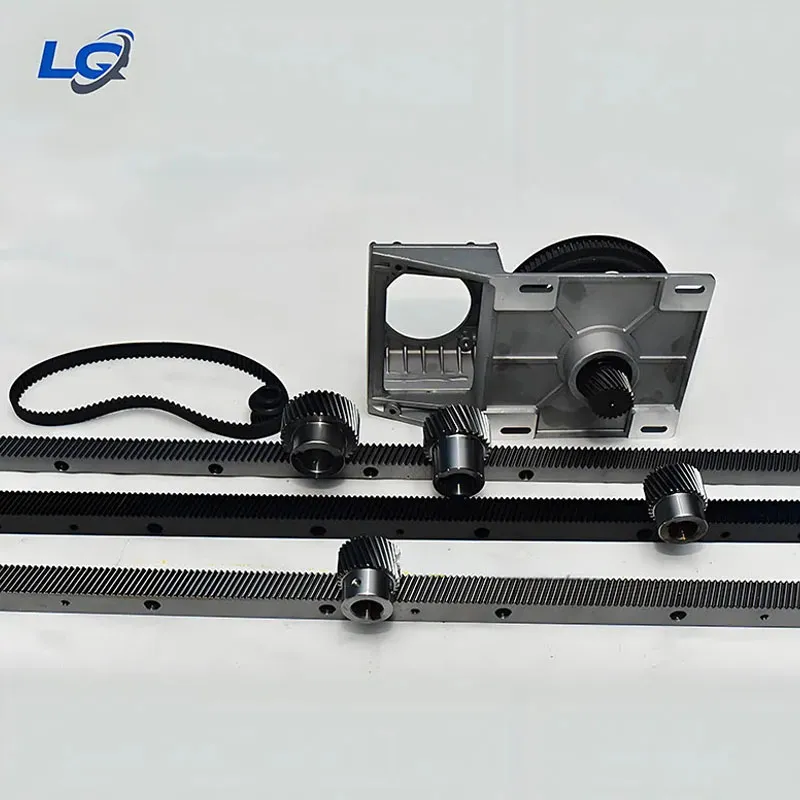
LONGQIAO’s category page says buyers should consider machine size, load, speed, accuracy requirement, working environment, and installation space. That is a strong practical checklist, and it matches how industrial buyers actually make transmission decisions.
I would break that into six questions:
Once those answers are clear, it becomes much easier to decide whether a straight rack, helical rack, or more advanced pinion arrangement is the right path. This is also where supplier engineering support matters. LONGQIAO specifically states that its engineers can help customers select the most suitable model.
One of the strongest points on the category page is one-stop matching with CNC components. LONGQIAO is not only selling racks and pinions. It also supplies linear guides, ball screws, motors, and drives. For global buyers, this reduces sourcing complexity and improves system-level compatibility.
This matters because a transmission system is never only one part. A rack and pinion axis still needs guide support, motor torque, control logic, and mechanical structure. If these parts come from disconnected suppliers, the project can lose time in matching and troubleshooting.
Yes. LONGQIAO specifically says it offers both high-precision rack systems for demanding industrial applications and cost-effective solutions for economical CNC machines and DIY projects. That makes the category useful for both premium and budget-sensitive buyers.
This is important because not all customers are buying the same type of machine. Some need a high-end gantry transmission for production work. Others need a more economical rack and pinion setup for a lighter CNC build or upgrade project. A supplier with flexible product levels can serve both groups more effectively.
A rack and pinion system consists of a straight rack and a rotating pinion gear. It converts rotary motion into linear motion and is widely used in CNC machines, automation systems, and industrial equipment.
The main advantages are high speed, long travel capability, strong load capacity, and easy installation. They are especially suitable for large-format CNC machines and gantry systems.
Backlash can be reduced with helical racks, dual pinion systems, spring-loaded pinions, or preloaded gear designs. The right method depends on the machine’s accuracy and budget requirements.
Yes. LONGQIAO says it offers customized modules, lengths, mounting holes, surface treatments, and special designs according to customer requirements.
You should consider machine size, load, speed, accuracy requirement, working environment, and installation space. LONGQIAO also states that its engineers can help customers choose the most suitable model.
No. A ball screw is still a strong solution for many shorter and high-accuracy axes. But for long-travel, high-speed, heavy-duty applications, rack and pinion is often the more practical choice. This is also how LONGQIAO positions the category page.