
LONGQIAO Technical Team | Export & Technical Documentation, Jinan Longqiao Electromechanical Equipment Co., Ltd. | Published August 18, 2026
يتم تحديث جداول التعريفات الجمركية والبنود الفرعية الوطنية وفقًا لجداول زمنية وطنية. تعكس بنية العناوين الواردة أدناه مصطلحات «النظام المنسق» السارية اعتبارًا من أغسطس 2026؛ لذا، يجب عليك دائمًا التأكد من البند الفرعي الساري ومعدل الرسوم الجمركية المعمول به لدى سلطة الجمارك في بلد الاستيراد قبل تقديم الإقرار.
Profile linear guides are most often declared under HS heading 8482 as linear ball bearings, because the block recirculates balls. Round shafts, supported rails and machine-specific assemblies can fall elsewhere. The six-digit code is international; the last digits, and the duty, are set by the importing country.
The Harmonized System is a six-digit nomenclature maintained by the World Customs Organization and used by more than two hundred customs territories. Those six digits are the same everywhere. Everything after them is national: China uses eight digits on the export declaration, the EU uses eight for the Combined Nomenclature and ten for TARIC, the United States uses ten in the HTSUS.
That split explains something importers ask us about constantly. Your Chinese supplier’s export code and your own import code will match on the first six digits and can legitimately differ after that. It is not a mistake and it is not a red flag.
The second thing worth internalising: classification follows what the article is, not what it will be bolted onto. A rail destined for a router, a rail destined for a laser cutter and a rail destined for a 3D printer carry the same code. Intended use only enters the picture where the nomenclature itself makes use a criterion, which for linear motion parts it usually does not.
Search this term and you will find shipment databases listing 8482, 8483 and 8466 side by side for products that look identical. Those aren’t errors in the data. They’re three genuinely arguable headings, and which one is right depends on what was in the box.
8482 — Ball or roller bearings. A profile rail block is a rolling-element bearing that happens to run in a straight line rather than around a shaft. The balls recirculate, the raceways are ground, the preload is set at assembly. Under ISO 12090, linear rolling bearings sit inside the rolling-bearing family, and the classification logic follows the same reasoning.
8483 — Transmission shafts, bearing housings, gearing, ball or roller screws. Ball screws are named in the heading text itself, which is why an SFU screw assembly rarely generates argument. Plain shafting that transmits torque also lands here. A linear shaft that carries no torque generally does not.
8466 — Parts and accessories for machine tools. This is where a lot of misclassification starts, because it feels intuitive: the rail goes on a CNC machine, so it must be a machine-tool part.
The tie-breaker is Section XVI, Note 2(a) of the nomenclature. Parts that are themselves goods of a specific heading in Chapter 84 or 85 get classified in that heading, regardless of the machine they are destined for. A bearing is a bearing before it is a machine-tool part. So if your block qualifies as a good of 8482, it does not fall to 8466 just because the buyer is a router builder.
Note 2(a) doesn’t dissolve every dispute. Where a rail has been machined with mounting features that make it usable on one specific machine model and nothing else, customs authorities in some jurisdictions have treated it as a dedicated part. That is the grey zone, and it is where a written ruling earns its cost.
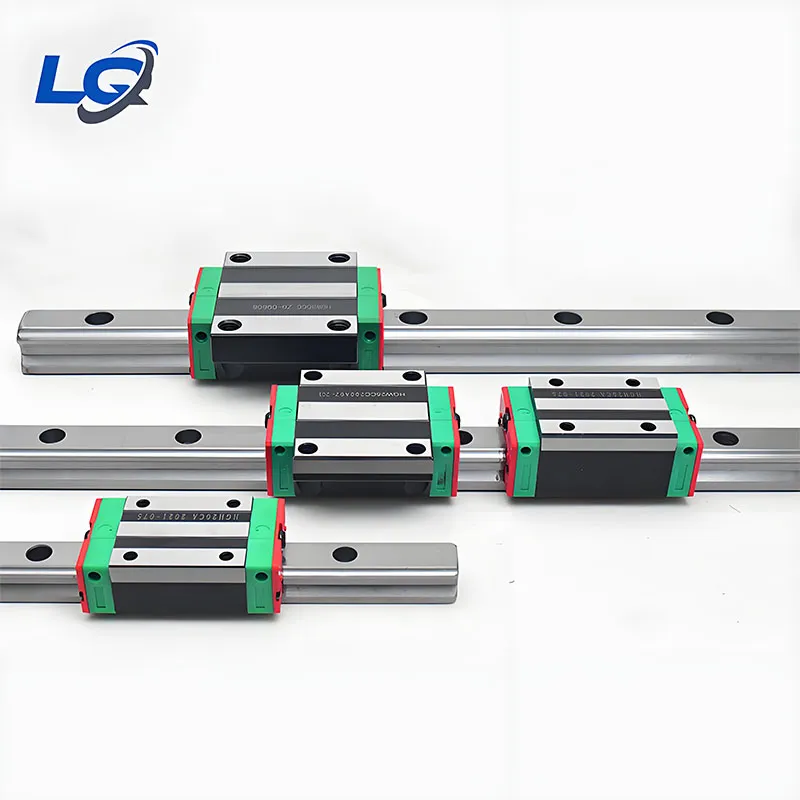
Take our HGR series, since it is the product this question usually comes attached to. Strip away the sales language and here is what the declaration actually rests on:
Nothing in that list is a dimension, and that is deliberate. We publish rail widths, accuracy grades and load ratings on request rather than in an article, because the figure that matters is the one on your confirmed order. For sizing and pricing, request a quotation. There is no published price list for these parts and we would rather say so than write a paragraph that pretends to answer.
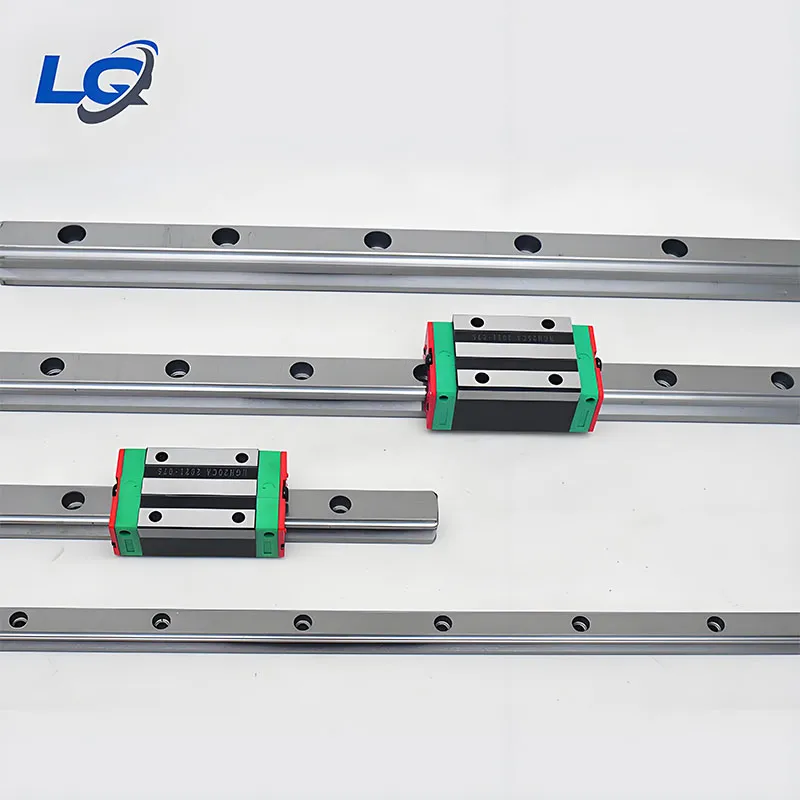
A linear shaft rod with no bearing function of its own is a hardened, ground steel bar. Ship it alone and Chapter 72 alloy-steel bar headings become plausible. Ship it as part of a linear bearing set and it reads as a component of that set. Same steel, different declaration.
SBR and TBR supported rails combine an aluminium support extrusion with a steel shaft. Two materials, one article, so GRI 3(b) applies. Which component gives the article its essential character is a judgement call, and the answer is not always the heavier one.
SFU ball screws are the easy case. Ball and roller screws are named in the text of 8483, and ISO 3408 covers the product family, so there is little room to argue. Screw plus nut, screw alone, nut alone: the nomenclature accommodates all three.
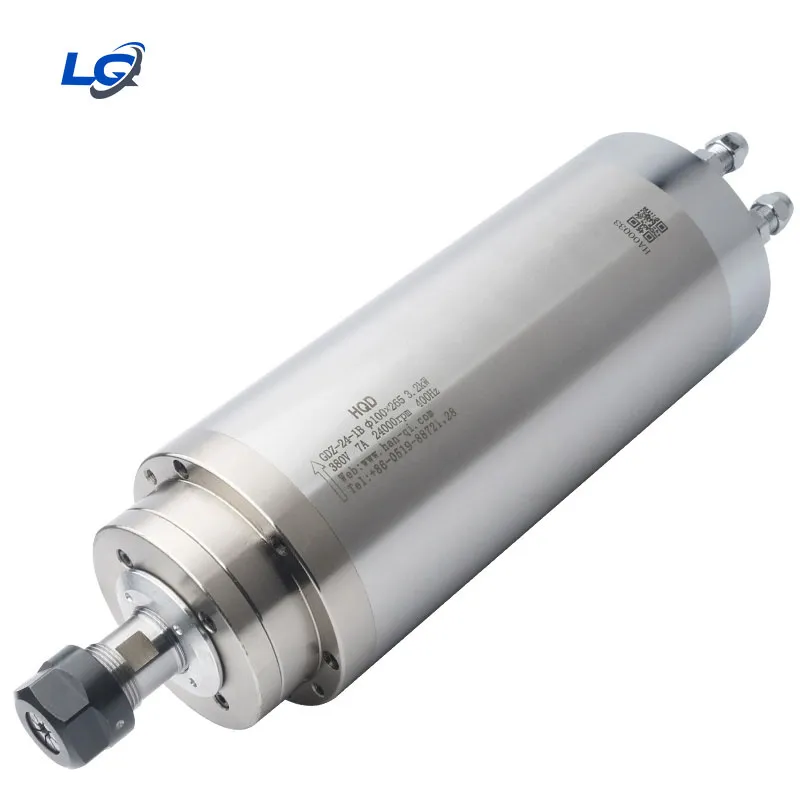
محركات المغزل and hybrid servo packages leave Chapter 84 entirely. Electric motors sit in Chapter 85, and a drive or driver shipped alongside a motor is a separate article with its own code. Buyers who order a motor-and-driver package as a single line item and expect a single code are usually surprised at the border.
That last point generalises. When someone orders a full axis from us — rail, screw, motor, driver, drag chain — the commercial invoice is one document but the customs declaration is several lines. منذ عام 2017 we have built the business around supplying that full axis from one source, and the paperwork consequence is that our packing lists break out components rather than describing “one CNC kit.”
Copying the code from the last shipment.
It works right up until it doesn’t. A supplier changes the block style, an order swaps profile rail for supported round rail, a shipment adds a driver that was never in the previous consignment, and the code stops matching the goods. Retroactive assessment covers years, not months, in most jurisdictions, and interest accrues on the whole period.
Compared with the shipment-lookup databases that dominate search results for this term, which show you what other exporters declared without explaining why, a published ruling tells you what the authority itself concluded and on what reasoning. One is crowd behaviour; the other is precedent. They are not equivalent inputs.
There is a real trade-off here, though, and pretending otherwise would be dishonest. Requesting a binding ruling takes weeks and commits you publicly to a position. If your product line is stable and your volumes are meaningful, that certainty is worth the delay. If you are placing a one-off trial order of a few blocks, the ruling process costs more in time than the classification risk is worth, and a well-documented reasonable-care file is the proportionate answer. Some bearing categories also attract trade-remedy measures in certain markets, which raises the stakes of landing in the wrong heading in a way that a straightforward duty differential does not.
We can tell you the code we declare on the export side, describe the article precisely enough for your broker to classify it, and supply test reports and inspection records to back it up. We do it routinely for buyers in Europe, the Americas, Southeast Asia and the Middle East.
What we cannot do is classify the goods for your customs authority. The importer of record carries that obligation, and no supplier statement transfers it. A supplier who confidently hands you a ten-digit code for a country they do not import into is guessing on your behalf.
A: Profile rail with a recirculating-ball block is most commonly declared under heading 8482. The subheading depends on the importing country’s tariff schedule, and rail supplied without blocks may classify differently from a complete rail-and-block assembly.
A: As a bearing, in most cases. Section XVI Note 2(a) of the nomenclature directs that parts which are goods of a specific heading go in that heading regardless of the machine they are intended for, so a linear bearing does not default to the machine-tool parts heading at 8466.
A: They can. Shipped as a matched, assembled unit they are usually one line. Shipped as loose rails and loose blocks on the same invoice, brokers often declare them separately. Confirm the treatment with your broker before the goods move, not after.
A: Heading 8483 names ball and roller screws explicitly, which makes this one of the least contested classifications in the motion-component category.
A: Not necessarily. A plain hardened shaft with no rolling elements of its own may classify as alloy-steel bar in Chapter 72 rather than as a bearing, depending on how it is presented and what accompanies it.
A: Only the first six digits are internationally harmonised. Chinese export declarations use eight digits, EU imports use eight or ten, US imports use ten. Divergence beyond the sixth digit is normal.
A: It determines the rate that applies, but the amount also depends on country of origin, applicable trade agreements, and any trade-remedy measures in force. Two shipments under the same code from different origins can be charged very differently.
A: We list the export-side code and a full article description. Whether that code carries over to your import entry is a decision for your broker under your own tariff schedule.
A: We do not publish price lists. Pricing depends on rail series, length, block type and quantity, so it is quotation-based. Send the size and quantity and we will price it.
Two things are worth doing while your current shipment is still in production. First, pull the article descriptions your broker filed on your last three entries and compare them against what you actually imported; misdescriptions are far more common than wrong codes, and they are what triggers a query. Second, put a calendar note against the nomenclature revision cycle. The Harmonized System is amended on a roughly five-year rhythm, headings get split and merged, and a code that was correct at your last audit can quietly stop existing.
If you want the export-side codes and article descriptions we use for a specific part number, send us the model and we will send the documentation set we would ship with it.
واتساب