
LONGQIAO Technical Content Team | Published August 24, 2026
Kugelumlaufspindeln vary along three practical lines: how the balls circulate back through the nut, whether the shaft is rolled or ground, and how preload removes backlash. Each choice trades cost, noise, rigidity, and lead time differently — picking a “type” really means picking a position on these three lines.
Most ball screw catalogues are organized by series code — a naming convention that tells a buyer almost nothing about how the part will behave on their machine. Underneath the model numbers, every ball screw assembly is really the sum of three separate choices made by the manufacturer: how the recirculating balls get back to the start of their track, how the shaft was machined, and how the nut is set up to remove play.
Get any one of these wrong for the application and the symptoms show up in predictable places — chatter under load, backlash that grows with wear, or a lead time that blows past the project schedule. This guide walks through each decision in the order a machine builder typically has to make it.
A ball screw only works because the balls recirculate — after rolling through the load zone inside the nut, they need a path back to the beginning. Three circulation designs cover most of what’s on the market, and they behave differently enough to matter for machine selection.
External (tube) return routes the balls through a tube mounted outside the nut body. It’s a mature, widely produced design and tends to be the easiest to source in odd lengths, but the external tube adds to the nut’s outer profile and is the part most likely to get knocked or contaminated in a dirty shop environment.
Internal deflector return moves the balls through a channel machined or inserted inside the nut itself, so nothing protrudes past the nut’s outer diameter. That compactness is the main draw for tight machine envelopes; the trade-off is a somewhat less forgiving assembly process, which shows up in cost.
End-cap return uses caps fitted to each end of the nut to redirect the balls, without the external tube. It sits in between the other two on compactness and is common on nuts that need to run at higher speeds without the drag of a protruding tube catching airflow or debris.
| Circulation Method | How It Works | Outer Profile | Typical Trade-Off |
| External (tube) return | Tube routes balls outside the nut | Larger, tube protrudes | Easiest to source; tube is exposed to knocks and contamination |
| Internal deflector | Balls redirected inside the nut body | Compact, no protrusion | Space-saving; tighter tolerances on nut manufacturing |
| End-cap return | End caps redirect balls at each end | Mäßig | Good for higher-speed running; caps are a wear point to inspect |
None of these designs is a universal answer. A long-travel axis with generous mounting space rarely needs the compactness of an internal deflector nut, and paying for that design there is money spent on a problem the machine doesn’t have.
The second decision is how the screw shaft itself was manufactured. Rolled shafts are formed by rolling the thread profile into the bar stock — a faster, lower-cost process that produces a fully usable ball screw for a large share of general automation work. Ground shafts are machined by precision grinding after heat treatment, which takes longer and costs more, but delivers tighter lead accuracy and a smoother running surface.
Here’s the misconception worth correcting directly: a ground shaft is not automatically “the better ball screw.” For a woodworking gantry axis or a general-purpose loading mechanism, a rolled shaft does the job at lower cost and shorter lead time, and the accuracy headroom of a ground shaft goes unused. Ground shafts earn their premium on axes where positioning repeatability directly affects part quality — tool-change positioning, fine-feed machining axes, or measurement equipment. Specifying ground everywhere by default is a common way projects overspend on a spec nobody asked for.
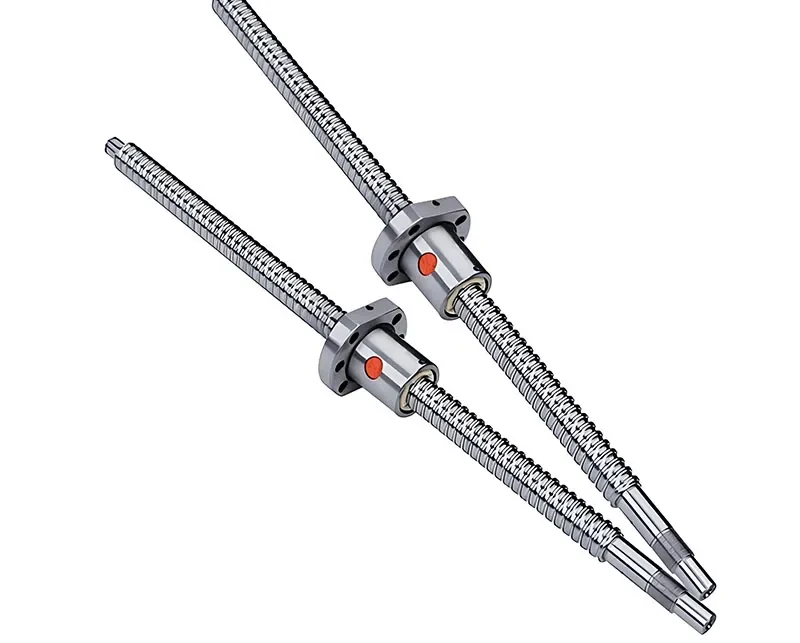
The third decision is preload — how the nut is set up to eliminate the small amount of play (backlash) that would otherwise exist between the balls and the screw thread.
Rigidity and backlash control go up with preload, but so does running torque and heat generation — a preloaded nut resists motion more than a free-running one, so an undersized motor paired with an aggressively preloaded screw is a real failure mode, not a theoretical one.
LONGQIAO’s SFU Kugelgewindetrieb converts rotary to linear motion, offering higher transmission efficiency, lower driving torque, and smoother, more stable positioning than trapezoidal screws — which is the baseline comparison most buyers are actually making when they weigh a ball screw against a cheaper lead screw alternative, not against another ball screw series.
Within the SFU line, circulation method, shaft finish, and preload class are configured to the axis rather than sold as one fixed spec sheet — the model is customizable, so the three decisions above translate directly into what gets specified before an order is placed. Compared to catalogue pages organized strictly by model code, framing the choice around circulation, shaft, and preload is closer to how the specification conversation actually happens once a machine’s mounting envelope and duty cycle are known. As with the rest of the linear guide and screw range, stock covers 200+ SKUs, which shortens lead time for configurations that fall within already-stocked variants; less common combinations move to a build-to-order quotation.
The most common error isn’t picking the wrong circulation method or preload class individually — it’s treating preload class and accuracy grade as the same spec. They’re not. Under ISO 3408, the standard covering ball screw dimensions and tolerances, lead accuracy grade and preload class are independent parameters: a screw can carry a tight accuracy grade with light or no preload, or a heavier preload class with a looser accuracy grade, depending on what the axis needs. A buyer who asks only for “the most precise option” without separating these two specs often ends up over-paying for accuracy the application can’t use, while under-specifying the rigidity it actually needed.
Because published figures for accuracy grades and lead specifications are not available without a project-specific quotation, the practical path is to describe the axis — travel length, duty cycle, direction-reversal frequency, mounting orientation — and let those requirements drive the circulation, shaft, and preload selection, priced against the actual configuration rather than a catalogue default.
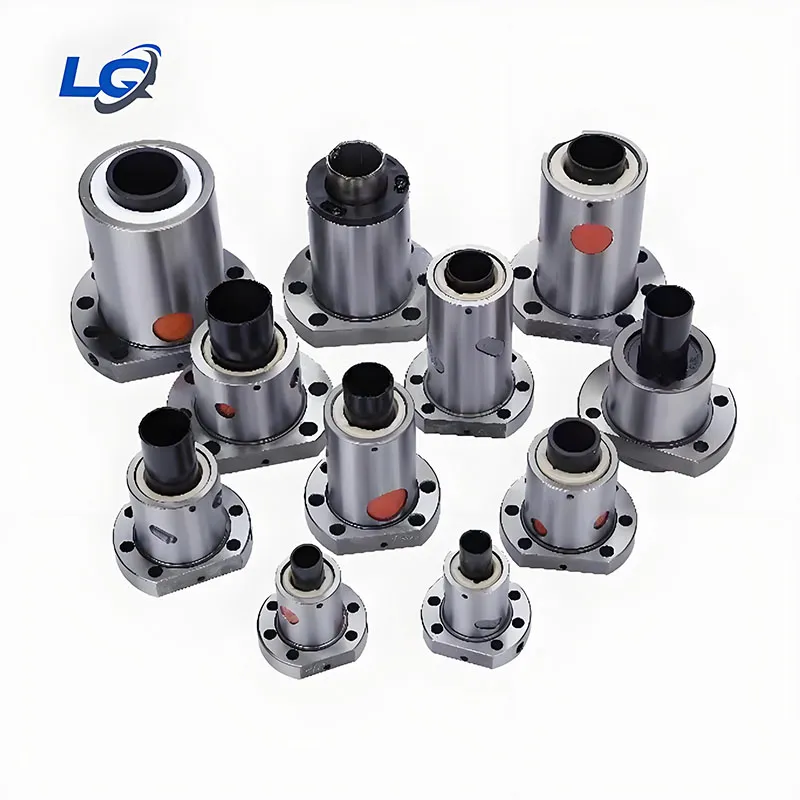
Ball screw pricing is quotation-based rather than published in a fixed range, since configuration (length, circulation type, shaft finish, preload class) changes the cost directly. For budgeting purposes, the fastest path to a number is providing the axis requirements above and requesting a quotation against a specific configuration rather than a general “ball screw” inquiry.
A: Not universally. Preload adds rigidity and removes backlash, but it also increases running torque and heat. Axes with light, unidirectional loads sometimes run fine on a non-preloaded single nut; reversing, load-bearing axes usually justify the added torque cost.
A: No — it means a different manufacturing process aimed at a different accuracy band. Rolled shafts are heat-treated and finished for durability like ground shafts; they simply don’t carry the same lead-accuracy tolerance, which is fine for applications that don’t need it.
A: Generally no. Circulation design is built into the nut body, so changing it means replacing the nut assembly, not modifying the existing one.
A: The recirculating balls reduce sliding friction compared to a trapezoidal screw’s direct thread contact, which is why Kugelumlaufspindeln typically run with lower driving torque and more consistent positioning over the screw’s life.
A: Not as fixed published figures — configuration-specific accuracy and lead specs are confirmed at quotation stage based on the axis requirements provided.