
The wrong hand pump can slow service work, spill oil, or leave machine parts short of lubricant. A low price means little if the unit cannot handle your fluid or fit your equipment. This guide helps you choose the right type and prepare a clear buying request.
Choose an oil hand pump by its job, approved fluid, required delivery, pressure, and connections. Use a transfer model to move oil between containers, an extractor to remove used oil, and a machine-mounted unit to feed lubrication points. Follow the maker’s instructions for mounting, filling, priming, and operation. For CNC equipment, confirm the complete supply circuit before ordering.

A manually powered unit uses movement from your hand to move liquid. That simple idea covers several very different tools. One fills containers from bulk storage. Another removes old fluid from a service point. A third stays on a machine and feeds small amounts of fresh lubricant to moving parts. These jobs require different capacities, connections, and operating limits.
At LQ, our focus is CNC components and their supporting systems. Buyers replacing a machine-mounted unit should provide the existing model, a photo, and the equipment drawing where possible. Buyers needing bulk oil transfer should say that clearly. A short description of the task often tells us more than a broad product name alone.
| Your task | Product family to investigate | Main selection check |
| Move fresh oil from storage to a container | Transfer equipment | Fluid approval, volume, and container fit |
| Remove used oil from equipment | Extraction equipment | Access method and waste capacity |
| Feed machine guideways or sliding parts | Mounted lubricant supply unit | Pressure, outlets, and circuit design |
| Supply points on a timed schedule | Automatic system | Timing, distribution, and monitoring |
A drum pump normally draws liquid from a bulk container. It may use a long intake tube, a barrel adapter, and an outlet hose. A rotary design uses a turning handle, while a lever-action design uses repeated handle strokes. If your storage is a 55 gallon container, confirm its opening, depth, and mounting arrangement rather than relying on the container label alone.
A lever-action fluid transfer pump is selected to move useful amounts between containers. A compact machine unit serves a different purpose: it sends fresh oil into a connected circuit. It may need to push against line resistance and distribution devices. Do not replace one type with the other just because both use manual power. Container size says nothing about the pressure needed at the destination.
En oil extractor pump removes liquid from equipment through an approved access route. A manual fluid extractor may use vacuum and a collection tank, while a small syringe-style tool moves smaller quantities. These tools suit removal tasks. They should not be assumed suitable for pushing clean lubricant through a machine’s distribution circuit. The direction of movement matters, as does the cleanliness of the fluid.
For an oil change, check the equipment maker’s service method first. Some designs allow access through a dipstick opening; others need a drain point or a different procedure. Suitable extension tubes must reach the intended location without being forced. A 200cc fluid extractor holds only 0.2 L, so capacity becomes a real limit when the service task involves several litres.
Search terms such as “oil change pump” and “oil change extractor” describe a service goal, not a universal product. The same applies to “extractor oil,” an awkward search phrase that usually points to removal equipment. When evaluating lawn mowers, an outboard engine, or workshop machinery, identify the approved access point and collection volume before choosing an extraction pump.
| Característica | Fresh-fluid supply | Used-fluid removal |
| Main purpose | Deliver clean fluid | Collect old fluid |
| Typical direction | Reservoir to service point | Equipment to waste tank |
| Key concern | Supply pressure and distribution | Access and collection capacity |
| Cleanliness rule | Keep fresh-fluid tools clean | Keep waste-handling tools separate |
Compatibility includes more than the liquid’s name. Motor oil, gear oil, engine oil, and transmission fluid may have different thicknesses and additive packages. Seals, internal parts, and tubing must suit the exact product. The maker’s approval should identify the fluid range and operating conditions. A general “multi-purpose” label is not enough to approve every liquid in your workshop.
Fuel transfer needs separate care. A fuel transfer pump, hand fuel pump, or diesel transfer pump requires specific fluid and service approval. Do not assume an industrial oil supply unit can act as a fuel pump or handle kerosene. Likewise, water-based coolant needs its own compatibility check.
Useful information to send with your inquiry:
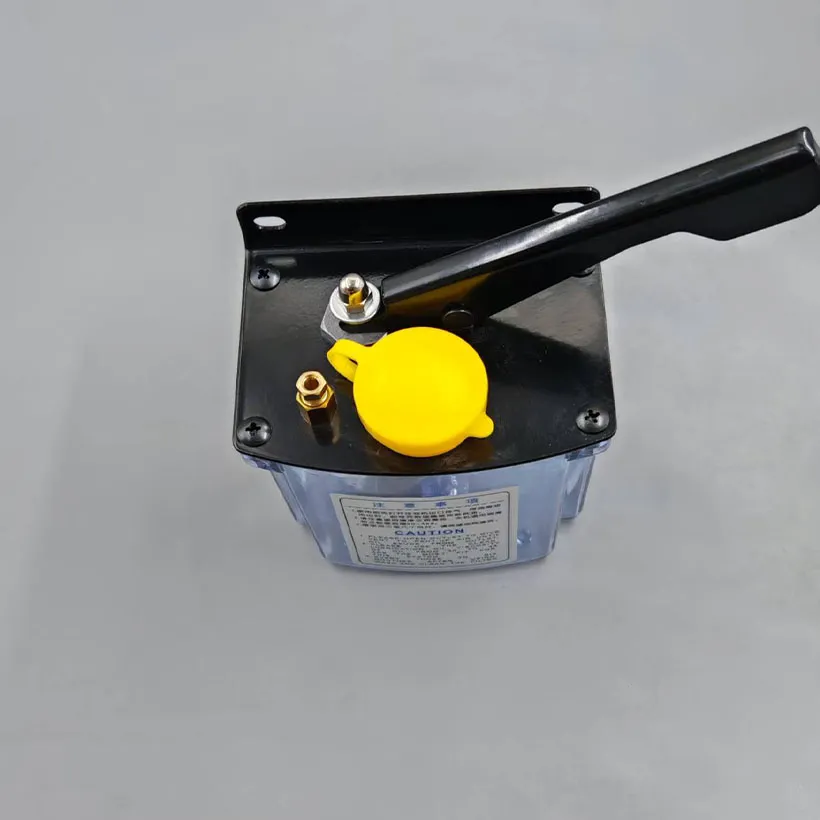
Delivery volume and pressure answer different questions. Volume tells you how much liquid moves. Pressure tells you whether the unit can overcome the connected system’s resistance. A product advertised for easy oil transfer may fill a container quickly but still be unsuitable for a restrictive machine circuit. Compare both requirements, together with the operating conditions used to measure them.
Manual delivery depends on handle speed, fluid thickness, temperature, and line conditions. Distinguish millilitres per stroke from millilitres per minute. Do not compare either directly with a gpm rating without checking the test basis. Also clarify whether gallon figures use US or imperial units. A quart may mean about 0.946 L in US units or 1.137 L in imperial units.
Suction performance matters when liquid must rise from a lower container. A self-priming claim still needs limits for height, fluid, and starting conditions; “self priming” does not mean unlimited lift. A diaphragm mechanism, piston design, or other fluid pump must be assessed using its own data. Avoid choosing by mechanism name alone. Ask what delivery you can expect in your actual layout.
| Information on a datasheet | What it means | Question for the supplier |
| Volume per stroke | Output from one specified movement | Is a stroke one-way or a complete cycle? |
| Volume per minute | Output over time | At what handle speed and fluid condition? |
| Maximum pressure | Stated pressure limit | What is the usable output at my pressure? |
| Intake lift | Permitted vertical draw | Under which priming conditions? |
| Reservoir capacity | Stored liquid volume | What are the usable level limits? |
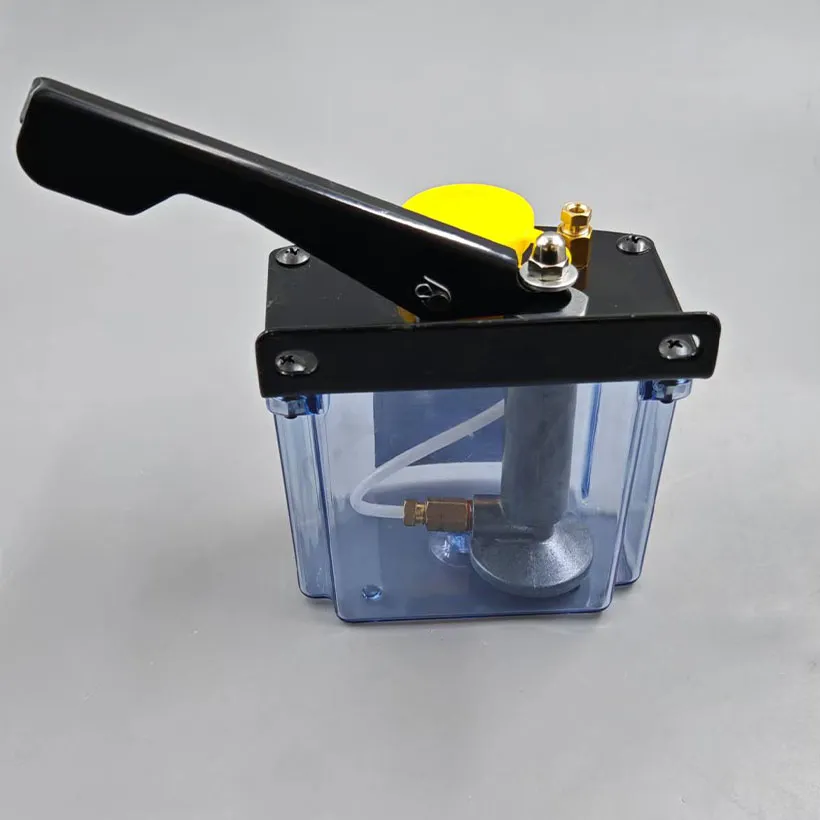
A suitable fluid transfer pump can still perform poorly with the wrong connections. Check thread type, tube size, routing, and the space needed to operate the handle. A loose adapter can leak; an overly narrow line can restrict delivery. On mounted equipment, leave enough room for filling and inspection. Access matters every time an operator needs to use the unit.
A flow control nozzle may be useful for container filling, but a machine circuit may need a fixed outlet and distribution fittings instead. Ask which parts are included in the pump kit. Do not assume a hose, intake tube, adapter, or mounting hardware arrives with every model. Descriptions such as “leakproof” also need context: correct assembly and approved operating conditions still matter.
Start with the machine maker’s instructions and the unit’s operating guide. The following steps are a planning checklist, not a model-specific commissioning procedure. Safe isolation, approved fluid, clean filling, and correct connections come first. Priming and air removal differ by design. Do not invent a method or force the handle if delivery fails or resistance feels unusual.
Manual operation puts timing in the operator’s hands. That can work well when the service plan is clear and practical. A visible reservoir helps with checks, but oil level alone does not prove every point receives enough. Confirm the supply method required by your linear guide rails and blocks and CNC ball screw assemblies before connecting them to a shared circuit.
Poor output can come from a low reservoir level, trapped air, dirty fluid, an intake issue, damaged seals, or a blocked line. Thick fluid in cold conditions can also make operation harder. A heavy-duty label does not identify the cause. First isolate the equipment as required, then inspect the system in a safe order. Never open a connection that may remain pressurised.
Cleanliness deserves special attention. In its bearing contamination guidance, SKF explains that particles can damage bearing surfaces and liquid contamination can degrade lubricant. The practical lesson is simple: clean the filling area and keep fresh-fluid equipment separate from waste-handling tools. A portable siphon pump used for oil removal should not become a fresh-oil filling tool without an approved cleaning process.
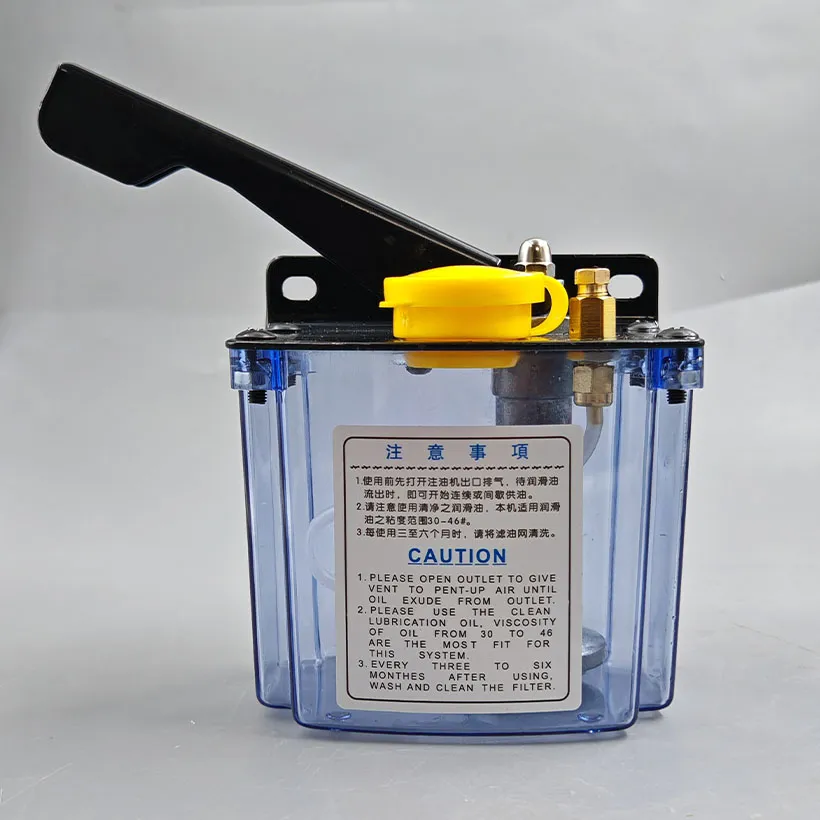
The LONGQIAO HP-5 hand-operated oil supply unit has a 0.5 L transparent reservoir, manual handle, and fixed mounting bracket. Its product page lists about 115 mm width, 125 mm overall height, and 5 ml/min rated delivery. It is intended for periodic clean-oil supply. Confirm the measurement conditions, pressure, outlet specification, and drawing before selecting it. The listed delivery is not a confirmed per-stroke dose.
Consider this illustrative buying scenario, rather than a reported customer case. A woodworking CNC OEM needs a compact mounted unit for a scheduled maintenance task. The buyer sends fluid data, mounting space, outlet requirements, and the circuit drawing. A large container-transfer tool would solve a different problem. If operators cannot reliably meet the service schedule, the buyer should instead evaluate CNC lubrication units and automatic supply options.
En LONGQIAO, we support integrated sourcing of transmission and motion control parts from China. You can coordinate guides, screws, stepper and servo systems, spindle motors, planetary gearboxes, and rack-and-pinion components in one purchasing plan. Contact LONGQIAO for CNC component matching and a quotation with your quantities, destination, required date, and spare-parts needs. Ask us to confirm available stock, lead time, technical matching, and consolidated shipping for the exact order.
Send a useful inquiry rather than only a product name:
This approach helps OEMs compare a sample before repeat purchasing. It also helps distributors define replacement stock and lets automation integrators review the full assembly. We aim to simplify sourcing while keeping compatibility visible. A clear technical request gives both sides a better basis for a reliable long-term supply plan.
Identify the job, approved fluid, required output, pressure, and available space. For a mounted unit, check the full circuit. For container transfer, check intake depth and outlet arrangement. A compact size is useful only when the unit meets the working requirements and remains easy to fill and operate.
Its published role is periodic machine supply, not bulk container handling. Do not treat it as a barrel-mounted substitute. If you need liquid transfer from large storage, state the container dimensions, fluid, and volume per task so the correct product family can be evaluated.
It depends on volume, frequency, access, and the service plan. Manual equipment avoids an electrical connection, but relies on the operator. Powered equipment may suit repeated tasks or timed supply. Compare the complete routine, including charging, maintenance, and monitoring, rather than the purchase price alone.
No. Check the manufacturer’s approved fluids and limits. A general performance tool description does not prove seal compatibility or suitability for every task. Use dedicated fresh-fluid and waste-fluid equipment where required, and check the exact product documentation before changing its use.
Only when the tool and equipment instructions allow it. Access, liquid type, collection capacity, and relative heights can affect the method. A service tool marketed as portable is not automatically suitable for every vehicle or machine. Use the maker’s procedure and an appropriate waste container.