
Choosing between a ball screw and lead screw is one of the most important decisions when designing a CNC machine. A wrong choice can reduce accuracy, increase friction, and shorten machine life. The right solution depends on precision requirements, load, speed, and application.
A ball screw vs lead screw comparison shows that ball screws are usually better for CNC machines requiring high precision, efficiency, and repeatability, while lead screws are more suitable for simple, low-speed, cost-sensitive applications. Understanding the difference helps engineers select the
When engineers compare ball screw vs lead screw, they are comparing two different methods of converting rotary motion into linear motion.
Both systems use a screw shaft and nut mechanism. When the screw rotates, the nut moves along the shaft. This movement allows machines to convert motor rotation into precise linear movement.
However, the internal structure is different.
A ball screw uses recirculating ball bearings between the screw shaft and nut. These balls roll inside the grooves, reducing friction and improving efficiency.
A lead screw uses direct sliding contact between the screw thread and lead screw nut. This design is simpler but creates more friction.
The basic difference:
| Feature | Ball Screw | Lead Screw |
| Contact method | Rolling ball bearing contact | Sliding contact |
| Efficiency | High | Lower |
| Precision | Very high | Medium |
| Friction | Low | Higher |
| Cost | Higher | Lower |
| Maintenance | Requires lubrication | Simpler |
| CNC suitability | Excellent | Limited |
| Load capability | Higher | Medium |
For CNC machines, especially those used for machining, engraving, cutting, and automation, ball screws for CNC are usually the preferred option.
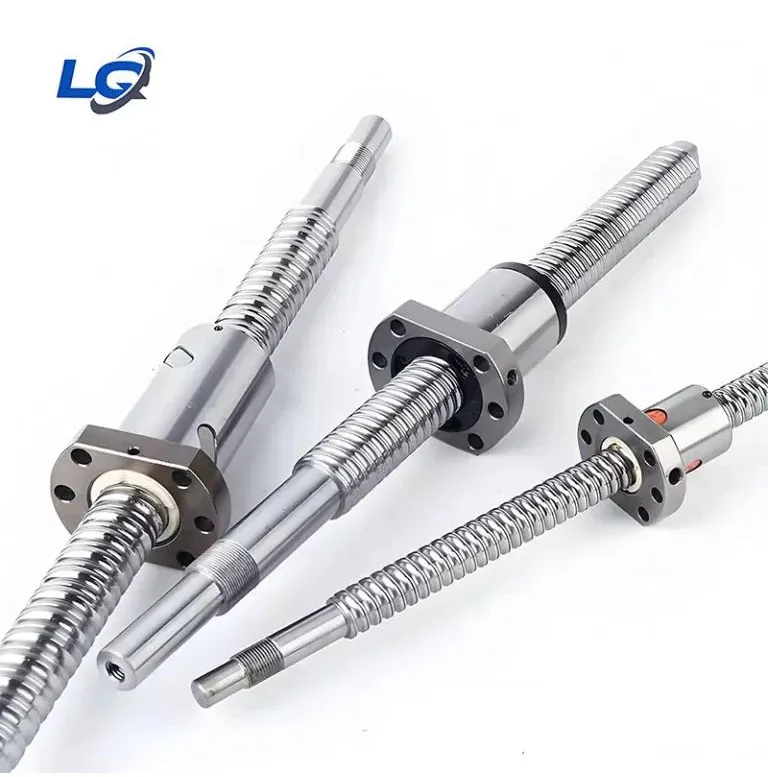
A ball screw is a mechanical transmission component designed to convert rotary motion into linear motion.
The main components include:
When the motor rotates the screw shaft, the ball bearings move through the grooves between the screw and nut. Because the balls roll instead of slide, friction is greatly reduced.
This allows the system to provide:
A CNC machine often uses a ball screw on:
LONGQIAO supplies complete ball screw assemblies for CNC applications, including different sizes, nut designs, and support solutions.
Common models include:
These models are widely used in CNC routers, engraving machines, laser machines, and automation equipment.
CNC machines require accurate positioning. A small movement error can affect the final product quality.
This is why ball screws are widely used in CNC systems.
The main reason is efficiency.
Traditional lead screws rely on sliding friction. During operation, the screw thread and nut create resistance. This causes:
Ball screws use recirculating ball bearings, allowing smoother movement with much lower friction.
The advantages include:
1. Higher Precision
A CNC machine needs accurate positioning. High-quality ball screws can achieve very precise movement, especially when combined with linear guides and servo systems.
2. Lower Friction
Because the ball bearings roll inside the groove, friction is significantly reduced.
3. Higher Speed Capability
Ball screws can operate at higher rotational speeds compared with many lead screw systems.
4. Better Repeatability
For automated production, repeatability is critical. Ball screw systems maintain consistent positioning over thousands of cycles.
A complete CNC motion system normally combines:
LONGQIAO provides these matched components to help customers build reliable CNC machines.
Related solutions:
A lead screw is one of the oldest mechanical linear motion solutions.
The working principle is simple:
The motor rotates the screw shaft. The lead screw nut moves along the screw thread. The rotary motion becomes linear movement.
Unlike ball screws, lead screws rely on sliding friction between the nut and screw thread.
Because of this design, lead screws have several characteristics:
Advantages:
Limitations:
Lead screws are often used in:
A basic lead screw can be a good choice when precision requirements are not extremely high.
For example:
A small desktop device may work well with a lead screw.
A professional CNC machining center usually needs a ball screw.
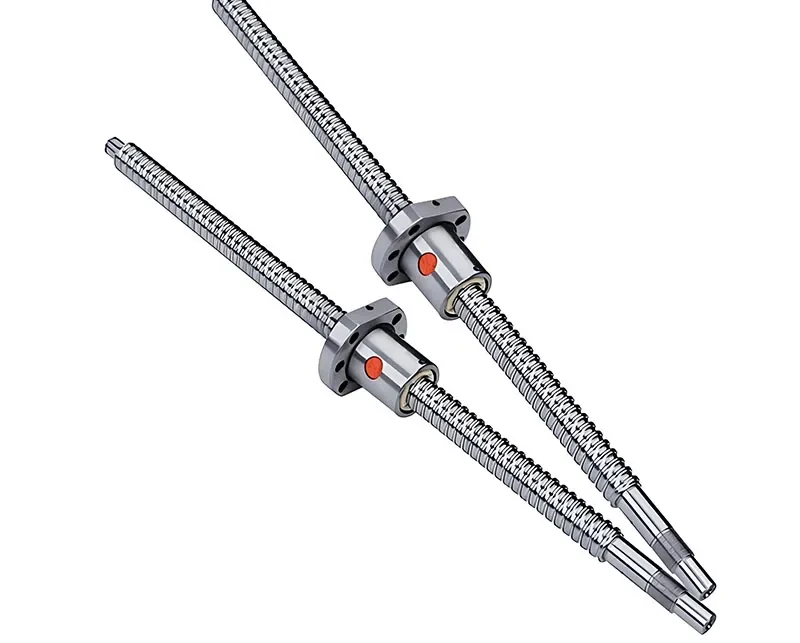
When engineers search for ball screws vs lead screws, they usually want to solve one core problem: how to achieve reliable and accurate linear motion.
Both systems can convert rotary motion into linear movement, but their performance is very different. The correct choice depends on machine accuracy requirements, operating speed, load conditions, and budget.
For CNC applications, ball screws generally outperform lead screws because they provide higher efficiency, lower friction, better repeatability, and longer service life.
The biggest difference between a ball screw and lead screw is the way they transfer force.
A ball screw uses rolling contact through steel balls, while a lead screw uses sliding contact between the screw thread and nut.
This structural difference directly affects machine performance.
| Comparison Factor | Ball Screw | Lead Screw |
| Motion principle | Rolling motion | Sliding motion |
| Friction level | Very low | Higher |
| Efficiency | 90%+ possible | Lower |
| Precision | High precision | Medium precision |
| Speed | High-speed operation | Lower speed |
| Heat generation | Low | Higher |
| Maintenance | Requires lubrication | Simple maintenance |
| Cost | Higher initial cost | Lower cost |
| CNC machining suitability | Excellent | Limited |
A ball screw is designed for applications that require precise linear motion.
CNC machines depend on accurate movement because even a small positioning error can affect:
Compared with lead screws, ball screws offer:
Higher Mechanical Efficiency
Because the ball bearings roll between the screw shaft and nut, energy loss caused by friction is reduced.
This means:
Better Precision and Repeatability
High-performance CNC equipment normally uses precision ball screw systems.
A precision ball screw can maintain accurate positioning during continuous operation.
This makes it suitable for:
Longer Service Life
The life of a ball screw depends on:
Properly installed ball screws can operate for many years with stable performance.
Although lead screws cannot match ball screws in CNC precision, they still have important advantages.
A lead screw system is simple, reliable, and affordable.
Common benefits include:
Lower Cost
The manufacturing process of a lead screw is simpler.
For applications where precision is not critical, a lead screw provides a cost-effective solution.
Self-Locking Ability
Some lead screw designs can resist back-driving.
This makes them useful for:
Simple Structure
A lead screw assembly usually contains:
Compared with ball screw assemblies, the design is easier to maintain.
The answer depends on your application.
Choose Ball Screw When You Need:
✔ High precision
✔ Fast movement
✔ High repeatability
✔ CNC machining performance
✔ Long operating cycles
Typical applications:
Choose Lead Screw When You Need:
✔ Lower cost
✔ Simple movement
✔ Low-speed operation
✔ Self-locking function
Typical applications:
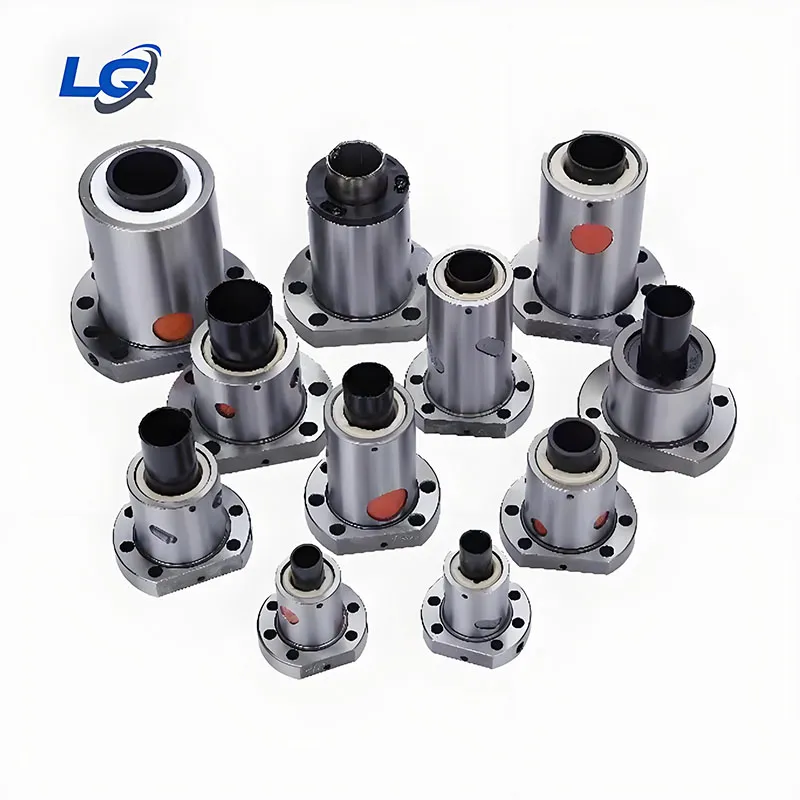
Understanding the application is the key to selecting the correct screw mechanism.
CNC Machine Applications
In CNC machines, ball screws are commonly installed on:
The combination of:
creates a complete precision motion system.
LONGQIAO provides integrated CNC motion solutions to help machine builders match components correctly.
Automation Applications
Automation equipment often requires thousands of repeated movements.
For these applications:
The correct choice depends on whether the system prioritizes precision or cost.
Another important selection factor is manufacturing accuracy.
There are two common types:
Ground Ball Screws
Ground ball screws are produced through precision grinding.
Advantages:
Recommended for:
Rolled Ball Screws
Rolled ball screws are manufactured through rolling processes.
Advantages:
Recommended for:
| Type | Accuracy | Cost | Application |
| Ground Ball Screw | Very High | Higher | Precision CNC |
| Rolled Ball Screw | Medium-High | Lower | General CNC |
LONGQIAO supplies different grades of ball screws according to customer requirements, including standard CNC applications and precision motion systems.
Selecting the correct screw requires considering several parameters.
1. Load Requirement
Heavy loads require stronger screw designs.
Consider:
2. Required Accuracy
For precision CNC:
Choose:
For simple movement:
A lead screw may be sufficient.
3. Speed Requirement
High-speed CNC systems need low-friction solutions.
Ball screws are better because they support:
4. Environment
Consider:
For example:
Woodworking CNC routers may require additional protection because dust can affect screw performance.
LONGQIAO / LQ specializes in supplying CNC machine components for global OEM customers.
Our product range includes:
We support customers including:
Our advantages include:
Factory Direct Supply
Customers can source multiple CNC components from one supplier.
Stable Quality
We focus on consistent machining accuracy and reliable performance.
Fast Delivery
Popular CNC components are available for efficient project schedules.
Technical Support
Our team helps customers select suitable:
The main difference between a ball screw and lead screw is the way they reduce friction during movement.
A ball screw uses recirculating ball bearings between the screw shaft and nut. These balls create rolling contact, allowing the system to convert rotary motion into linear motion with high efficiency.
A lead screw uses sliding contact between the screw thread and lead screw nut. This makes the structure simpler but creates more friction.
In short:
Ball screw = higher precision, higher efficiency, better for CNC
Lead screw = lower cost, simpler design, suitable for basic movement
For CNC machining applications, ball screws are usually the preferred choice because accuracy and repeatability are critical.
Yes, in most CNC applications, ball screws are better than lead screws.
CNC machines require:
Ball screws provide these advantages because the ball bearing mechanism reduces friction and improves motion accuracy.
Typical CNC applications using ball screws include:
However, lead screws can still be useful for low-speed machines where cost is more important than precision.
CNC machines use ball screws because they provide more accurate and efficient linear motion.
Compared with traditional lead screws, ball screws:
A CNC machine depends on coordinated movement between:
The ball screw ensures that motor rotation becomes accurate linear movement.
The lifetime of a ball screw depends on:
A properly installed ball screw system can provide many years of stable operation.
To extend service life:
LONGQIAO recommends selecting the correct ball screw size based on actual CNC machine requirements instead of simply choosing the lowest-cost option.
Yes, a lead screw can often be replaced with a ball screw, but the system must be redesigned carefully.
Engineers should check:
A ball screw upgrade can significantly improve machine performance, but compatibility must be confirmed before replacement.
The correct choice depends on your machine requirements.
Choose a ball screw if you need:
✔ High precision
✔ CNC machining capability
✔ High speed
✔ Continuous operation
✔ Low friction
Choose a lead screw if you need:
✔ Lower cost
✔ Simple movement
✔ Low-speed operation
✔ Basic positioning
For professional CNC machines, automation equipment, and precision motion systems, ball screws are usually the better solution.
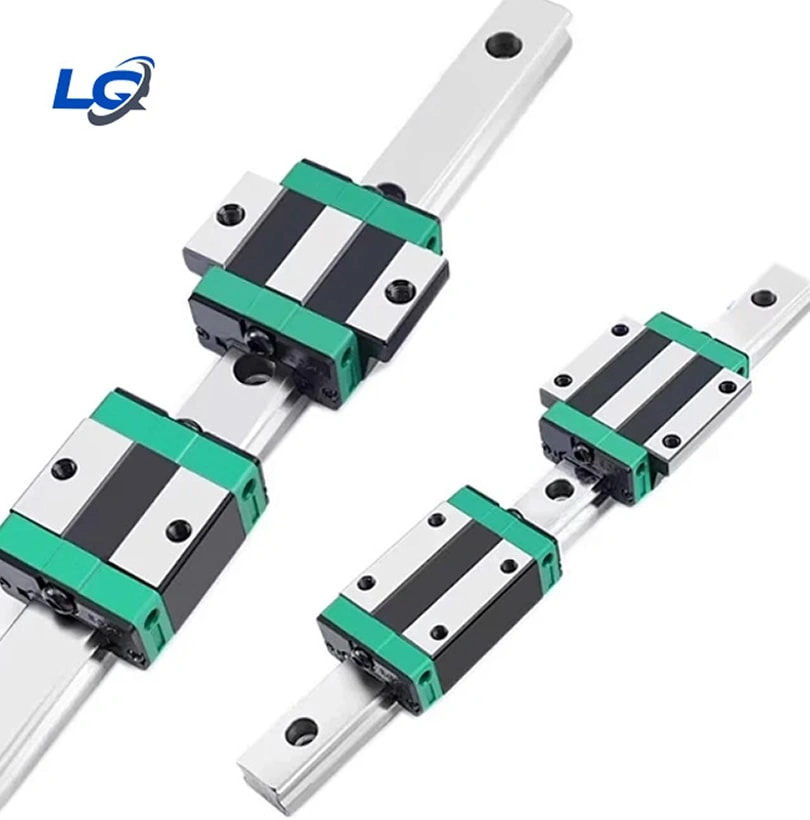
When selecting components for a CNC machine, the screw system should work together with other transmission parts.
A reliable CNC motion system normally includes:
| Component | Function |
| Ball Screw | Converts rotary motion into precise linear movement |
| Linear Guide | Supports smooth rail movement |
| Servo Motor | Provides controlled rotation |
| Servo Driver | Controls motor operation |
| Controller | Coordinates machine movement |
| Gearbox | Adjusts torque and speed |
LONGQIAO provides complete CNC motion solutions instead of only individual parts. This helps OEM customers improve compatibility and reduce sourcing time.
LONGQIAO / LQ is a China-based supplier specializing in CNC machine transmission and motion control components.
We support international customers with:
Customers can source multiple components from one reliable supplier:
Our customers include:
We understand that every application requires different specifications.
When customers contact LONGQIAO, we can help evaluate:
This reduces the risk of incorrect component selection.
Choosing between a ball screw and lead screw directly affects CNC machine accuracy, productivity, and operating cost.
If you are developing a CNC machine, upgrading existing equipment, or sourcing replacement components, LONGQIAO can help you select the right motion solution.
Send us your:
Our engineering team can recommend a suitable:
Contact LONGQIAO today and build a more reliable CNC motion system.