
A wrong ball screw selection can reduce CNC machine accuracy, increase backlash, and affect long-term machining performance. Many buyers focus only on diameter and pitch but ignore important factors such as nut type, preload, precision grade, and application requirements.
The SFU series ball screw is one of the most widely used solutions for CNC machines, automation equipment, and precision motion systems. Models such as SFU1605, SFU1610, SFU2005, and SFU2505 are selected according to required load, speed, accuracy, and installation space.
A ball screw is a mechanical transmission component that converts rotary motion into linear motion through recirculating ball bearings.
Compared with a traditional lead screw, a ball screw uses rolling contact instead of sliding friction. This design provides:
In CNC applications, the ball screw works together with:
to create a complete motion control system.
LONGQIAO supplies CNC motion components for global machine manufacturers, distributors, and automation companies, including CNC ball screw systems, linear guides, motors, and transmission components.
The SFU series includes different diameter and pitch combinations.
The most common models include:
| Model | Screw Diameter | Pitch | Typical Application |
| SFU1605 | 16 mm | 5 mm | Small CNC machines, 3D printers |
| SFU1610 | 16 mm | 10 mm | Higher-speed motion systems |
| SFU2005 | 20 mm | 5 mm | CNC routers and automation |
| SFU2505 | 25 mm | 5 mm | Medium CNC machines |
| SFU2010 | 20 mm | 10 mm | Higher-speed CNC applications |
An SFU ball screw consists of two main parts:
Inside the nut, precision steel balls circulate through a return system.
The screw shaft contains a specially machined groove where the balls move.
When the screw rotates:
This mechanism allows the ball screw system to achieve precise positioning with low friction.
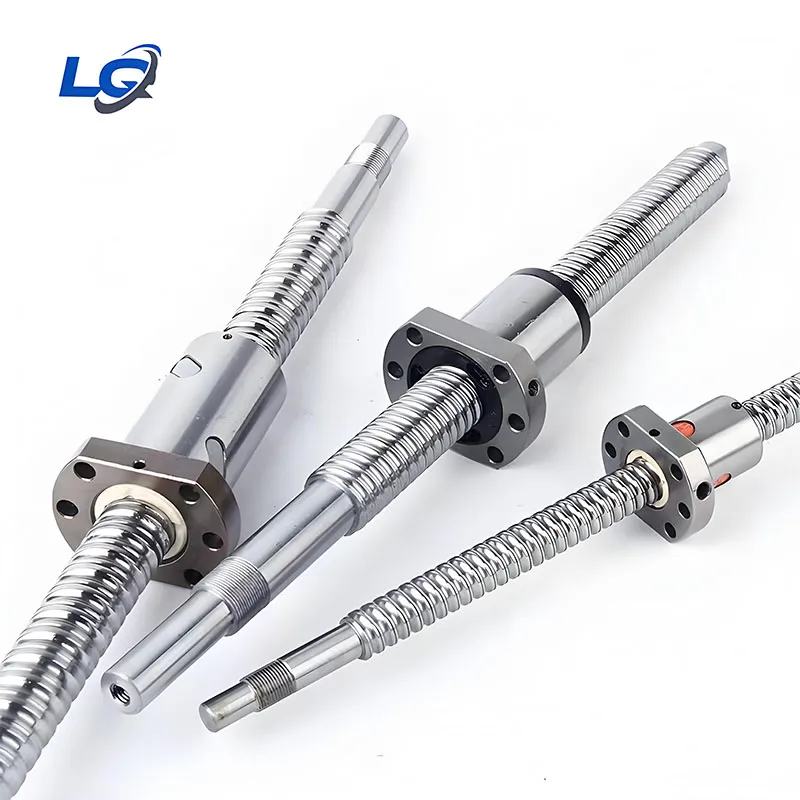
A complete ball screw and nut assembly usually includes:
| Component | Function |
| Screw shaft | Provides precision movement path |
| Ball nut | Transfers rotary motion into linear movement |
| Ball bearings | Reduce friction |
| Return system | Allows balls to recirculate |
| Support bearing | Supports shaft rotation |
The quality of each component affects:
For CNC machine builders, selecting a complete ball screw assembly is often more efficient than matching separate parts.
The popularity of the CNC ball screw comes from its ability to provide precise motion control.
Compared with traditional screw systems, ball screws offer:
High Efficiency
Because rolling contact replaces sliding contact, friction is significantly reduced.
This means:
High Precision
For CNC equipment, positioning accuracy is critical.
A high precision ball screw provides:
Precision grades commonly include:
Higher accuracy grades for special applications
Reduced Backlash
Backlash refers to unwanted movement between the screw and nut.
A properly configured ball screw nut with preload can reduce backlash and improve:
The SFU1605 is one of the most common compact ball screw models.
Its specifications:
| Parameter | SFU1605 |
| Diameter | 16 mm |
| Pitch | 5 mm |
| Nut type | SFU nut |
| Application | Compact CNC and automation |
SFU1605 is widely used in:
Advantages:
For small machines requiring precise motion, SFU1605 provides a practical balance between performance and cost.
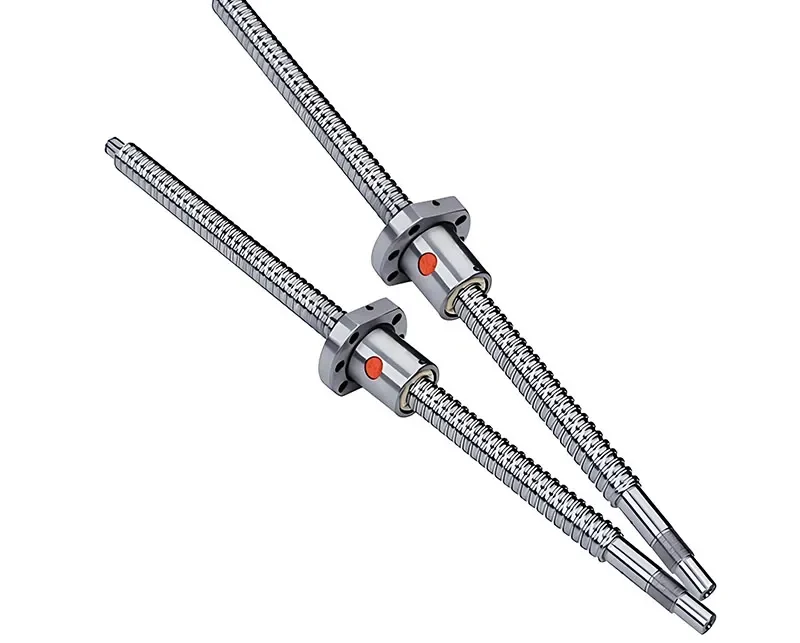
The SFU1610 uses the same 16 mm diameter but has a larger pitch.
Compared with SFU1605:
| Model | Pitch | Main Feature |
| SFU1605 | 5 mm | Higher positioning accuracy |
| SFU1610 | 10 mm | Faster movement speed |
A larger pitch allows:
It is suitable for applications where speed is more important than maximum positioning accuracy.
Typical uses:
The SFU2005 is a popular choice for CNC machines requiring stronger performance.
Specifications:
| Parameter | SFU2005 |
| Diameter | 20 mm |
| Pitch | 5 mm |
| Application | CNC routers and machining equipment |
Compared with SFU1605:
Common applications:
The SFU2505 ball screw is designed for applications requiring higher load capacity, stronger rigidity, and stable precision performance.
Compared with smaller models such as SFU1605 and SFU2005, the SFU2505 provides a larger screw diameter and stronger structural support.
Typical applications include:
| Parameter | SFU2505 |
| Screw diameter | 25 mm |
| Pitch | 5 mm |
| Nut type | SFU series nut |
| Application | Medium CNC and automation |
| Performance | High rigidity and precision |
The larger shaft diameter improves:
For CNC machines requiring stable cutting performance, SFU2505 is often a preferred solution.
Choosing the correct ball screw requires understanding the relationship between diameter, pitch, speed, and accuracy.
| Model | Diameter | Pitch | Speed | Accuracy | Application |
| SFU1605 | 16 mm | 5 mm | Medium | High | Small CNC |
| SFU1610 | 16 mm | 10 mm | High | Medium | Fast motion |
| SFU2005 | 20 mm | 5 mm | Medium | High | CNC routers |
| SFU2505 | 25 mm | 5 mm | Medium | High | Industrial CNC |
The pitch of a ball screw determines how far the nut travels during one rotation of the screw shaft.
For example:
SFU1605 → 5 mm movement per revolution
SFU1610 → 10 mm movement per revolution
A larger pitch provides:
Higher travel speed
Faster positioning
A smaller pitch provides:
Therefore:
| Requirement | Recommended Pitch |
| High precision | Smaller pitch |
| Fast movement | Larger pitch |
| CNC machining | Usually 5 mm pitch |
| Automation positioning | Depends on speed requirement |
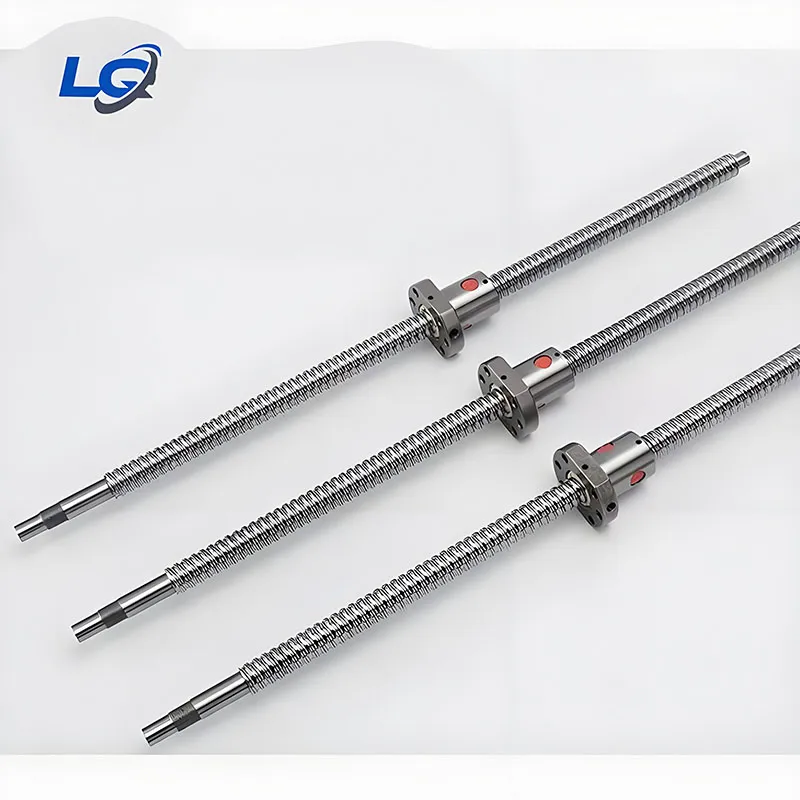
The nut is one of the most important parts of the ball screw system.
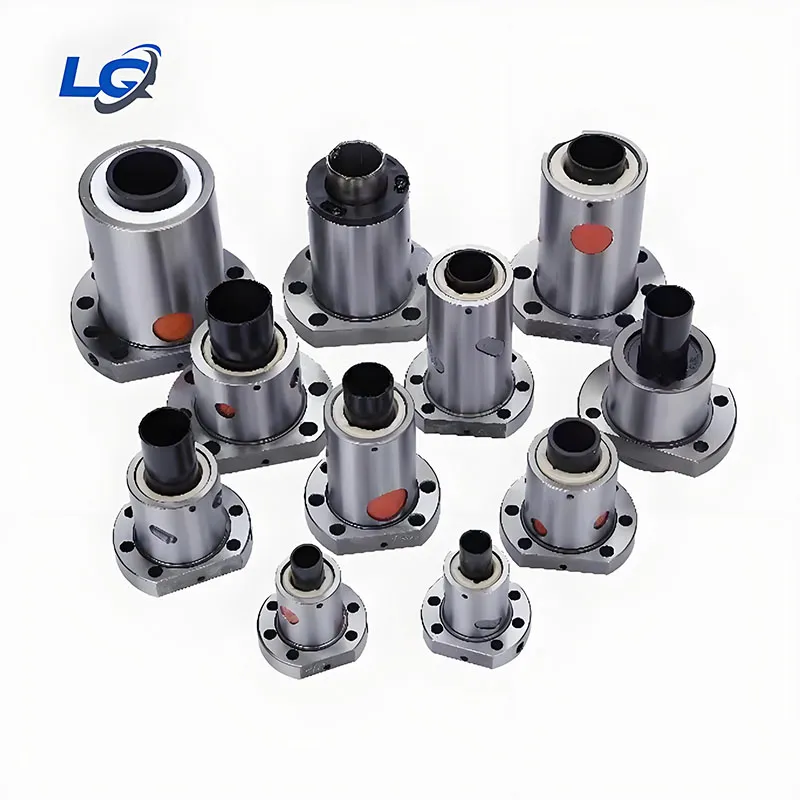
Different nut designs affect:
Common SFU nut types include:
The standard SFU ball screw nut is widely used in:
Advantages:
Preloaded Ball Screw Nut
A preloaded nut removes internal clearance between:
Benefits:
Preloaded systems are commonly used in:
Many customers compare a ball screw with a lead screw when selecting a linear actuator.
The main differences are:
| Feature | Ball Screw | Lead Screw |
| Contact method | Rolling contact | Sliding contact |
| Efficiency | Higher | Lower |
| Friction | Low | Higher |
| Precision | Higher | Lower |
| Cost | Higher | Lower |
A lead screw relies on sliding friction between the screw thread and nut.
A ball screw uses recirculating ball bearings to reduce friction.
For CNC machines requiring precise positioning, a ball screw is usually the better choice.
Besides the common SFU series, manufacturers also use other ball screw structures.
SFU Series
The SFU series is the most common rolled ball screw type.
Features:
Common models:
The SFS series is designed for applications requiring specific mounting structures.
Features include:
Common uses:
The SFE series provides different nut configurations for specific applications.
Advantages:
The combination of SFE and SFS options allows engineers to select the correct structure according to machine requirements.
The SFI design is commonly selected for applications requiring:
It is suitable for:
The SFK series is another configuration used in specialized applications.
When selecting between different ball screw types, engineers should evaluate:
Precision grade is an important factor when selecting a CNC ball screw.
Common grades include:
C7
C5
C7 is commonly used for:
Advantages:
C5 provides higher precision.
Suitable for:
Compared with C7, C5 provides:
Backlash affects CNC positioning accuracy.
When there is excessive clearance between:
the machine may experience:
A properly selected preload helps achieve:
A high-quality CNC ball screw requires correct installation.
Important factors include:
Screw End Support
The screw end design affects:
Common configurations include:
Fixed-fixed
A suitable support bearing helps maintain:
A CNC axis usually contains both:
Proper alignment between the guide and ball screw ensures:
For machine manufacturers, accurate dimensions are important before purchasing.
LONGQIAO can support customers with technical information such as:
This helps customers confirm:
Selecting the correct ball screw is a critical decision for CNC machine builders, automation companies, and equipment manufacturers. The right model improves positioning accuracy, machine stability, and production efficiency.
However, choosing between different SFU series models requires more than checking the diameter. Engineers should consider:
A properly selected CNC ball screw helps create a reliable motion system with long-term performance.
When selecting an SFU ball screw, engineers usually evaluate the following parameters.
| Selection Factor | Why It Matters |
| Screw diameter | Determines rigidity and load capacity |
| Pitch | Controls speed and positioning resolution |
| Nut type | Influences mounting and performance |
| Precision grade | Determines accuracy |
| Preload | Controls backlash and rigidity |
| Screw length | Affects stability and critical speed |
Different machines require different ball screw specifications.
Small CNC Equipment
Recommended:
Applications:
Focus:
Recommended:
Requirements:
The ball screw must work together with the linear guide to maintain accurate axis movement.
Recommended:
Requirements:
A CNC machine depends on accurate transmission between the motor and moving axis.
The ball screw plays an important role by converting:
Rotary motion → Linear motion
The screw shaft rotates through the motor drive.
The ball nut moves along the shaft.
This movement controls:
The result is precise linear positioning.
Rigidity affects how well the ball screw maintains accuracy under load.
Higher rigidity helps reduce:
For heavy machining applications, selecting a larger diameter screw improves structural stability.
Backlash is unwanted clearance between the screw and nut.
A high-quality ball screw reduces backlash through:
Reduced backlash improves:
Unlike a traditional lead screw, a ball screw uses rolling ball bearings.
This reduces sliding friction and provides:
For continuous CNC operation, low-friction transmission improves overall machine performance.
LONGQIAO / LQ is a China-based supplier of CNC machine components, providing integrated motion solutions for global customers.
Our customers include:
We provide not only individual components but complete CNC motion solutions.
Working directly with a professional supplier helps customers achieve:
LONGQIAO supports customers from prototype development to mass production.
For distributors and machine brands, LONGQIAO provides flexible cooperation options.
OEM Support
Available services include:
ODM Support
For customers developing new machines, LONGQIAO can assist with:
Private Label Cooperation
Distributors can build their own product line with:
Many CNC manufacturers need more than a single ball screw.
A complete CNC axis normally requires:
LONGQIAO provides multiple CNC motion components from one supplier.
Advantages include:
✔ Better component compatibility
✔ Easier purchasing management
✔ Reduced supplier communication
✔ Stable long-term supply
LONGQIAO focuses on helping global customers solve CNC motion transmission requirements.
Our advantages include:
We understand the requirements of:
Our team can help customers select:
Global Supply Capability
LONGQIAO supports international customers with:
Choosing the right SFU ball screw improves machine accuracy, reliability, and production efficiency.
Before contacting LONGQIAO, please provide:
Our engineers can recommend:
Contact LONGQIAO today for high-quality ball screw and CNC motion component solutions.
An SFU ball screw is used to convert rotary motion into precise linear movement. It is widely applied in CNC machines, automation equipment, actuators, and precision motion systems.
The main difference is pitch.
SFU1605 has a 5 mm pitch, providing better positioning control.
SFU1610 has a 10 mm pitch, providing faster linear movement.
The choice depends on whether the application prioritizes accuracy or speed.
SFU2005 and SFU2505 are commonly used for CNC routers because they provide better rigidity and load capacity compared with smaller models.
The final selection depends on machine size and cutting requirements.
C5 provides higher accuracy than C7.
C5 is usually selected for precision CNC equipment, while C7 is commonly used in general CNC machines and automation applications.
Yes. LONGQIAO supports OEM, ODM, and private label cooperation, including customized dimensions, nut configurations, packaging, and integrated CNC component sourcing.
Yes. LONGQIAO supplies:
Customers can source multiple CNC components from one reliable supplier.