
A CNC machine may stop because of one small problem: poor lubrication. If oil cannot reach the guide rail, ball screw, bearing, or moving axis, friction increases fast. A reliable hand pressure oil pump helps make oil transfer, manual lubrication, and machine maintenance cleaner, easier, and more controlled.
A ручной масляный насос is a manual pump used for transferring, dispensing, and topping up oil, gear oil, motor oil, lubricant, lube, diesel, antifreeze, and other compatible fluids. It can work as a hand pump, oil hand pump, manual oil pump, transfer pump, oil transfer pump, or pump for oil in CNC machines, workshops, automotive service, agriculture, construction, and industrial fluid handling.
A hand pressure oil pump is a manual fluid transfer tool. It moves oil from one container to another by hand force. Buyers may search for it as a hand pump, oil hand pump, hand oil pump, manual pump, manual oil pump, pump for oil, hand pump for oil, or transfer hand pump.
The basic structure is simple. A handle, lever, piston, or rotary mechanism creates suction and pressure. Oil enters the pump body, then flows out through a hose, nozzle, or spout. Some models are small and portable. Some are designed for gallon drums or barrel mounting.
For LONGQIAO customers, this product is not only a workshop accessory. It connects with CNC machine maintenance. Linear guides, linear bearings, ball screws, rack and pinion systems, spindle motor parts, and machine slides all need clean and regular lubrication. A practical hand pressure oil pump helps operators add oil where the machine needs it.
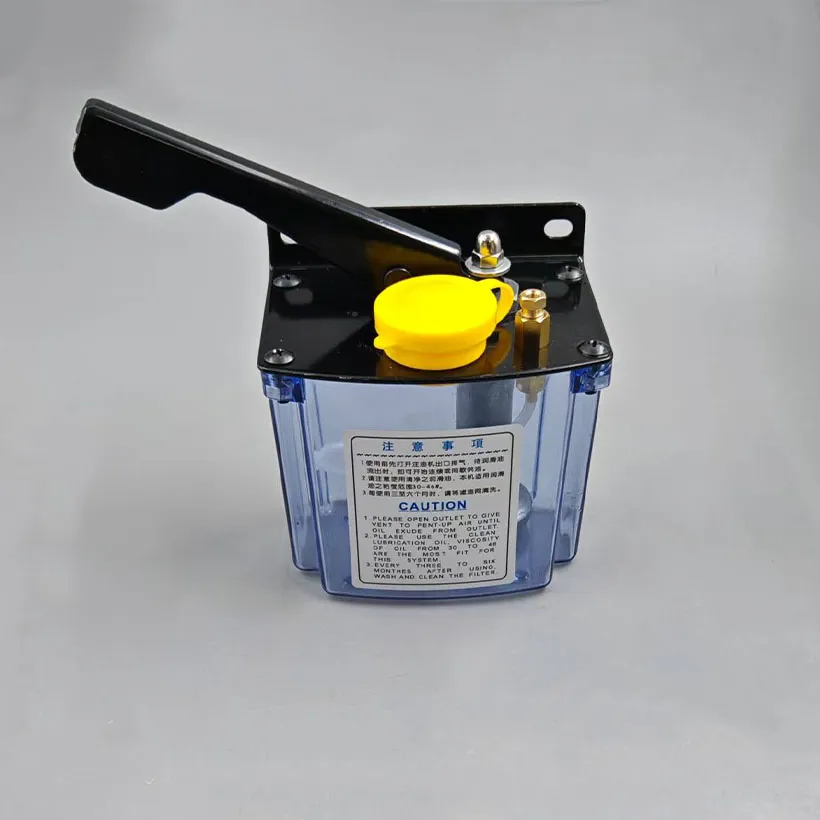
A hand pump works by moving fluid through pressure difference. When the operator pulls or presses the handle, the pump chamber draws oil in. When the handle moves again, the pump pushes oil out through the hose or nozzle.
Different pump structures create this movement in different ways. A piston hand pump uses a piston. A rotary pump uses a rotating handle and inner parts such as rotor and vanes. A diaphragm pump uses a flexible diaphragm. A siphon pump uses gravity after flow starts.
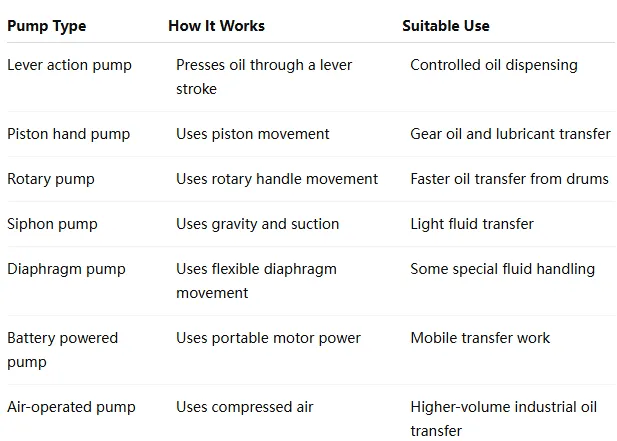
A hand pump manual rotary pump or manual rotary pump for transferring oil is useful when workers need a simple way to move oil without electricity. For controlled topping up and transferring oil, a lever style pump may be easier to control.
CNC machines depend on smooth motion. Linear guide rails, linear guide bearings, linear rail bearings, ball screw assemblies, ball screw nuts, rack and pinion drives, and bearing blocks all create movement. When these parts lack lubrication, friction increases. Noise follows. Wear comes next.
A manual oil pump helps operators perform routine maintenance. It can refill a small reservoir, add oil to a lubrication point, or support temporary machine service when an automatic lubrication unit is not available. In many small CNC workshops, a hand pressure pump is a low-cost but useful tool.
A ручной масляный насос can support:
For factories with many machines, an auto lubrication system or lubrication unit for CNC may be better. But for small workshops, spare parts service, testing areas, and repair teams, a manual pump is still useful.
There is no single best pump for every job. The best choice depends on the fluid, container, flow rate, working environment, and operator habit. A small hand pump is easy to carry. A rotary pump can move oil faster. A diaphragm pump fits certain fluid handling jobs. An air-operated pump is better for larger industrial transfer work.
A transfer pump for oil should match viscosity. Thin oil flows easily. Thick gear oil needs more force. For very high-viscosity grease, buyers may need grease pumps instead of a normal oil pump.
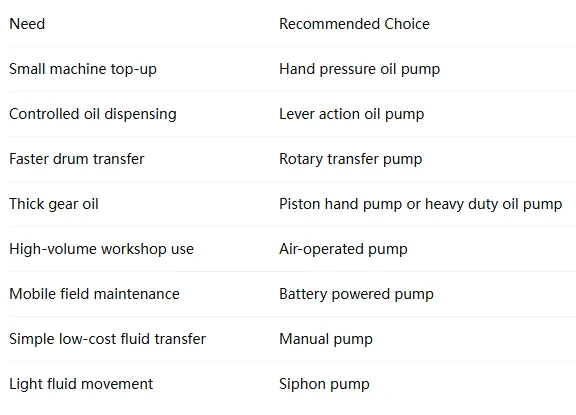
If a product is described as rotary pump for transferring oil, manual rotary pump for transferring, or transfer pump for oil, check whether it is suitable for the oil type and drum size before buying.
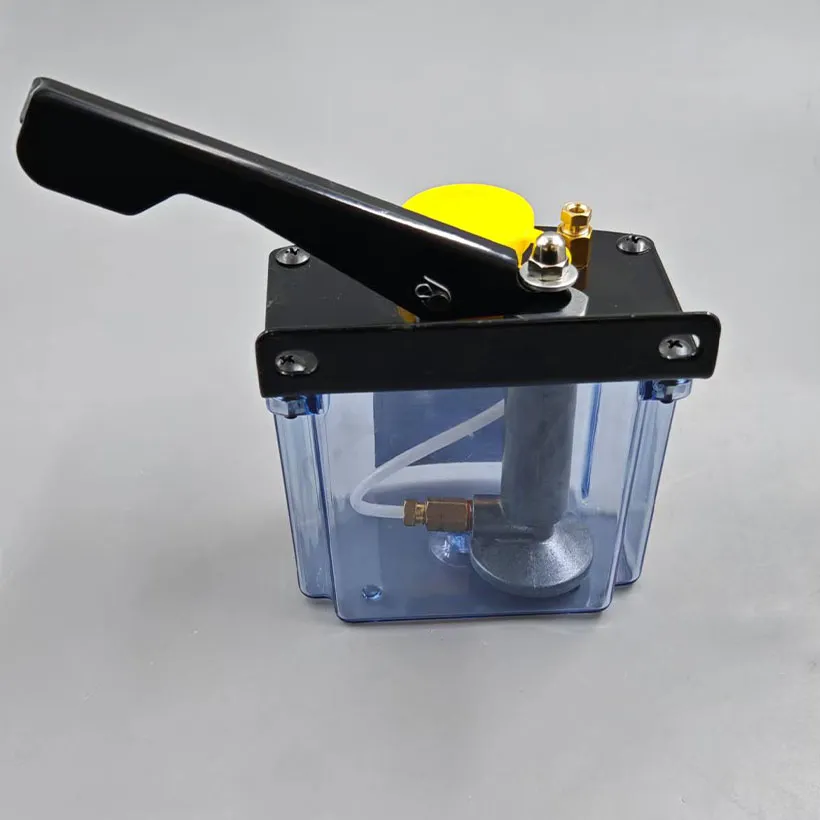
An oil hand pump is mainly used for oil and lubricants. However, compatibility depends on the pump material, sealing parts, hose, nozzle, and viscosity range. Never assume one pump can handle every fluid.
Common fluids include:
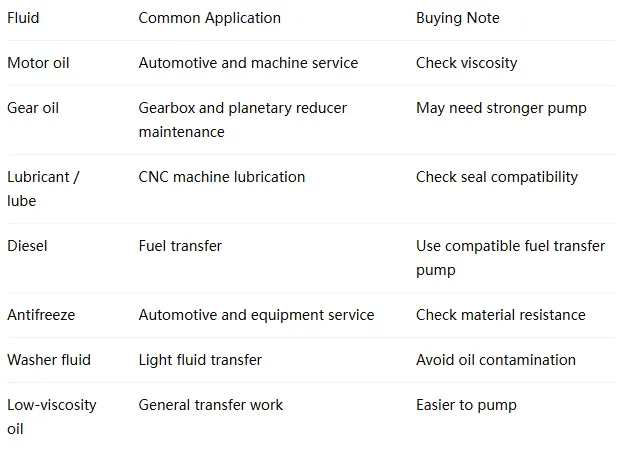
Some pumps are designed for the transfer of low viscosity fluids. Others are stronger and suitable for heavier lubricant or gear oil. A robust and reliable pump should not leak from the body, hose, spout, or threaded connection.
Material also matters. Some pumps use sturdy steel. Some use aluminum. Some may include stainless steel and technopolymers. A stainless steel spout can improve durability. Anti-wear materials can help the pump last longer in daily workshop use.
The hose controls reach. A short hose may look fine in a product photo but become frustrating beside a real CNC machine. Operators often need to reach tight spaces behind guards, under tables, near ball screws, or around linear guide rail systems.
The nozzle controls output. A simple nozzle is enough for basic oil dispensing. A long spout can help reach small filling ports. A stainless steel spout is stronger for daily use. Some pumps include a meter to measure the oil amount. Others are non-metered and designed for simple transfer.
Important accessories to check:
A metered pump helps when the operator needs to record exact oil quantity. A non-metered pump is simpler, lower cost, and easier to maintain. For many CNC repair tasks, a non-metered manual pump is enough.
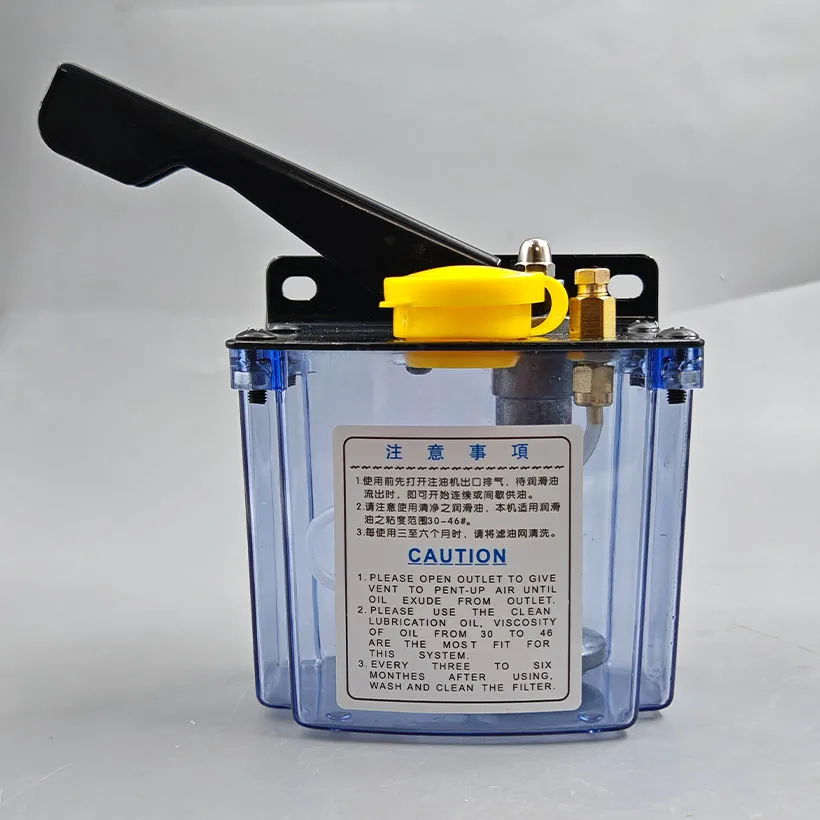
Hand-operated oil pumps are used in many working environments because they are simple and portable. They do not need electric power. They are useful for low-to-medium transfer volume, mobile maintenance, and backup service work.
Common industries include:
In different industries, the same rule applies: choose the right pump for the fluid. A pump is ideal only when the fluid, viscosity, container, hose, connection, and flow rate match the work.
For CNC factories, a pump can support routine lubrication, but it should not replace a planned maintenance system. Machines that run all day may need an automatic lubrication system for machinery, while manual pumps can support service, refill, and emergency use.
A heavy duty pump should be strong, stable, and easy to use. For B2B buyers, durability matters. A cheap pump that leaks after a few weeks can create more cost than it saves.
Before buying a pump, check fluid viscosity first. Motor oil is usually easier to transfer. Gear oil can be thicker. Lubricant may require more force. Diesel and antifreeze may need different seals. For very thick grease, use dedicated grease pumps.
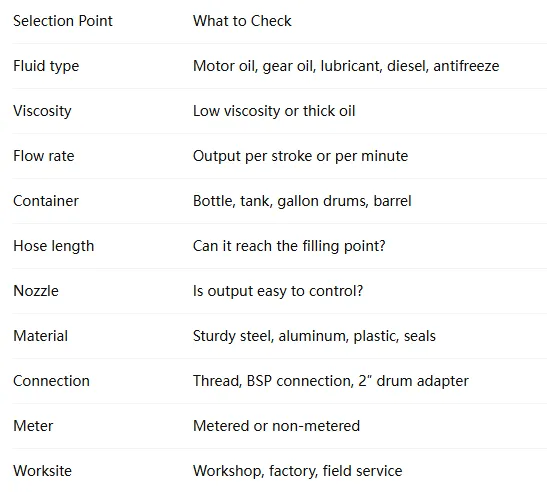
For CNC workshops, also consider storage and cleanliness. Label one pump for oil, one pump for gear oil, and one pump for other compatible fluids. This avoids cross-contamination.
A ручной масляный насос is simple and manual. An auto lubrication system is more automatic and suitable for machines that need regular oil supply during operation. Both can be useful, but they serve different needs.
An automatic lubrication unit can feed oil through lines to multiple lubrication points. A lubrication pump unit or lubrication control unit may help control timing and output. A lubrication metering unit can help distribute oil more evenly. A continuous lubrication system can support equipment that needs steady oil delivery.
If a CNC machine runs many hours per day, an automatic lubrication system for machinery may be worth considering. If the machine is small, used occasionally, or serviced manually, a hand pressure pump may be enough.
For suppliers and distributors, this creates a useful product path: hand oil pump for simple service, lubrication unit for machine upgrade, and auto lubrication system for heavier production use.
The first mistake is choosing by price only. A pump may look simple, but poor sealing, weak hose, bad thread fit, or wrong material can cause leaks and downtime.
The second mistake is using the wrong pump for the fluid. A pump suitable for low-viscosity oil may not work well with thick gear oil. A pump used for diesel may not be suitable for motor oil if contamination matters.
Avoid these mistakes:
For B2B buyers, the real cost is not only the pump price. It is also leakage, wasted oil, maintenance delay, machine downtime, and replacement sourcing.
LONGQIAO / LQ is a China-based one-stop supplier of CNC machine parts. The company supplies linear guides, ball screws, stepper and servo systems, spindle motors, planetary gearboxes, rack and pinion systems, drag chains, and related CNC accessories for global OEMs, distributors, trading companies, automation integrators, and machine builders.
This matters because maintenance tools and machine parts work together. A CNC machine may need a hand pressure oil pump, lubrication unit, linear guide bearing, ball screw assembly, servo motor driver, spindle motor, rack and pinion gear, planetary reducer, and cable carrier drag chain in the same project.
Relevant LONGQIAO internal links:
For OEMs, LONGQIAO helps improve component compatibility. For distributors, it supports repeat supply. For repair teams, it helps reduce spare parts sourcing time. For automation integrators, it makes multi-component purchasing easier.
A ручной масляный насос is used for manual oil transfer, topping up, and oil dispensing. It can move motor oil, gear oil, lubricant, lube, diesel, antifreeze, washer fluid, or other compatible fluids, depending on pump material and seal design.
Yes. A hand pump can support CNC maintenance by helping operators add oil to lubrication points, refill small reservoirs, and service linear guides, ball screws, bearings, and moving axes. For frequent automatic supply, an auto lubrication system may be better.
An oil transfer pump mainly moves oil from one container to another. A lubrication pump supplies oil to machine lubrication points. Some manual pumps can support simple lubrication work, but a dedicated lubrication pump for CNC machine may be better for continuous machine service.
Choose a meter if you need to measure how much oil is dispensed. Choose a non-metered pump if you only need simple transfer or top-up work. Non-metered pumps are simpler and often easier to maintain.
Not always. Check material, seals, hose, nozzle, viscosity range, and supplier instructions. To avoid contamination, many workshops use separate pumps for motor oil, gear oil, diesel, antifreeze, and lubricant.
Use an automatic lubrication unit when the CNC machine runs often, has many lubrication points, or needs regular oil delivery during operation. Use a hand pressure oil pump for manual service, top-up, repair, and low-volume maintenance.
Check fluid type, viscosity, flow rate, hose length, nozzle design, spout type, drum connection, 2″ thread compatibility, material, seal quality, meter option, and whether the pump is lever action, piston, rotary, air-operated, or battery powered.
Да. LONGQIAO supports one-stop CNC machine parts sourcing, including linear guides, ball screws, stepper and servo systems, spindle motors, rack and pinion systems, planetary gearboxes, drag chains, and related maintenance accessories.