
Wrong tool height wastes material fast. A small setup mistake on a woodworking machine can ruin plywood, MDF, cabinet parts, or finished wooden products. A reliable woodworking tool setter helps remove guesswork and makes every machine setup easier.
A woodworking tool setter is a setup tool used to set or check cutting height, depth, and tool position on CNC routers, router tables, table saws, drills, and other woodworking machines. It helps woodworkers make repeatable machine setup faster, safer, and more accurate.
A régleur d'outils pour le travail du bois is a measuring and setup device that helps a woodworker set cutter height, cutting depth, blade position, router bit height, or tool offset before machining. It can be a manual setting gauge, a digital depth gauge, a mechanical height gauge, or a CNC touch-off device.
In simple words, the tool setter helps you answer one key question: “Is my tool at the right height?” That sounds small. But in real woodworking, one wrong setting can create a bad groove, uneven edge, wrong joinery depth, or poor cabinet fit.
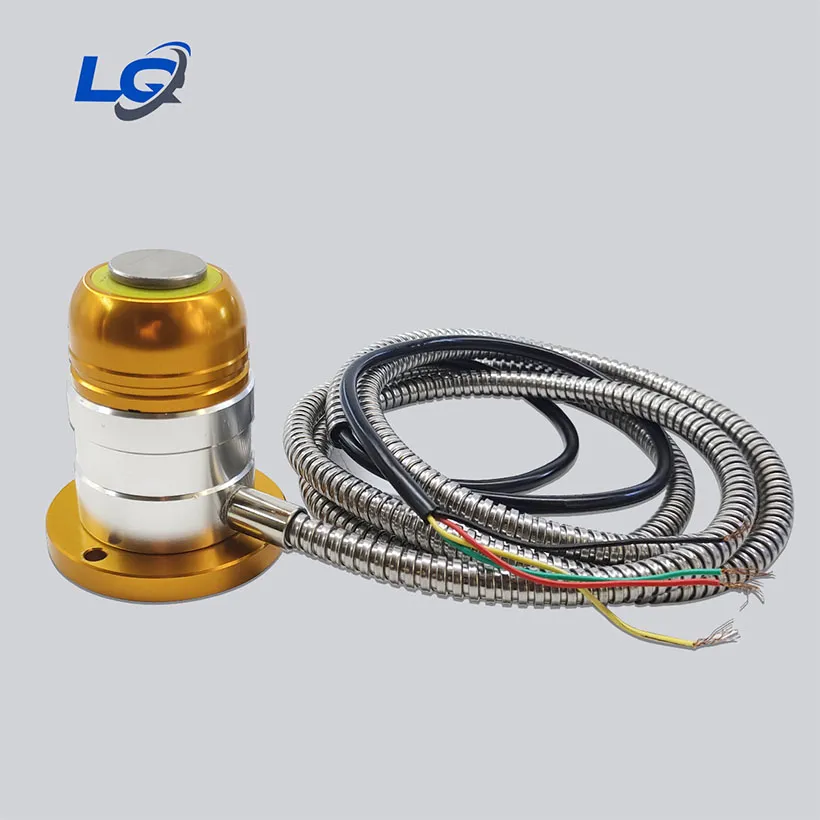
For CNC machines, a setter may help measure tool length or tool position. A CNC glossary defines a tool setter as a device used to measure tool length or diameter and transfer measured values into the machine offset table under repeatable reference conditions. For woodworking shops, this idea matters because accurate tool setting supports cleaner cutting and fewer test pieces.
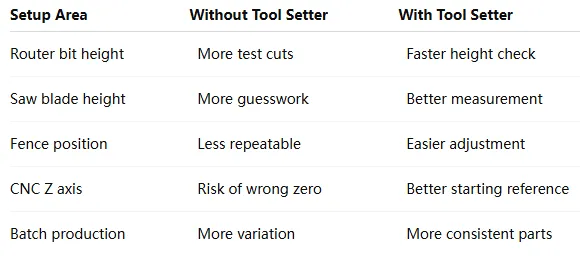
A tool setter helps make machine setups faster and more repeatable. Instead of raising a router bit by eye or testing a saw blade height on scrap wood many times, the operator can use a setting gauge or depth gauge to check the tool position directly.
For a router, the tool setter can help set the height of a router bit above the table. For a saw, it can help check saw blade height or distance from the fence. For a drill, it can help confirm depth. For a CNC router, a cnc tool setter or touch plate can help set the Z axis reference before cutting.
This kind of setup control helps reduce:
A good setting gauge does not replace skill. It supports skill. It gives the operator a clear number, a stable reference, and a faster setup path.
A repeatable setup means you can return to the same setting again and again. This is very important for cabinet makers, furniture factories, sign makers, door producers, and CNC woodworking shops. When the setup changes every time, parts may not fit. Production slows down.
For example, if a router bit height changes by a tiny amount, a groove may become too shallow or too deep. If a table saw blade is not set correctly, a cut may not match the required joinery. If a CNC Z axis is not set well, the cutter may cut too deep into the spoilboard or leave material uncut.
A repeatable machine setup is useful because it helps the workshop create the same result with less effort. It also helps train new operators. Instead of saying “raise it a little,” you can say “set it to this measurement.”
This is why many professional woodworkers keep several setup tools in the workshop. Some also use a combination square, miter gauge, jig, fixture, clamp, and digital height gauge together.
A tool setter and a depth gauge are related, but they are not always the same. A depth gauge measures height or depth. A tool setter focuses on setting tool position for a specific cutting process.
A depth gauge for woodworking machines is often used to check cutting depth, router bit height, blade height, or drill depth. A precision height and depth gauge can be useful on a router table, table saw, drill press, and other workshop equipment.
A tool setter may include more setup-focused features. For example, it may have laser-engraved graduations, a micro-detent adjustment system, horizontal operation, or a shaped sleeve that helps the operator touch off the tool safely and consistently.
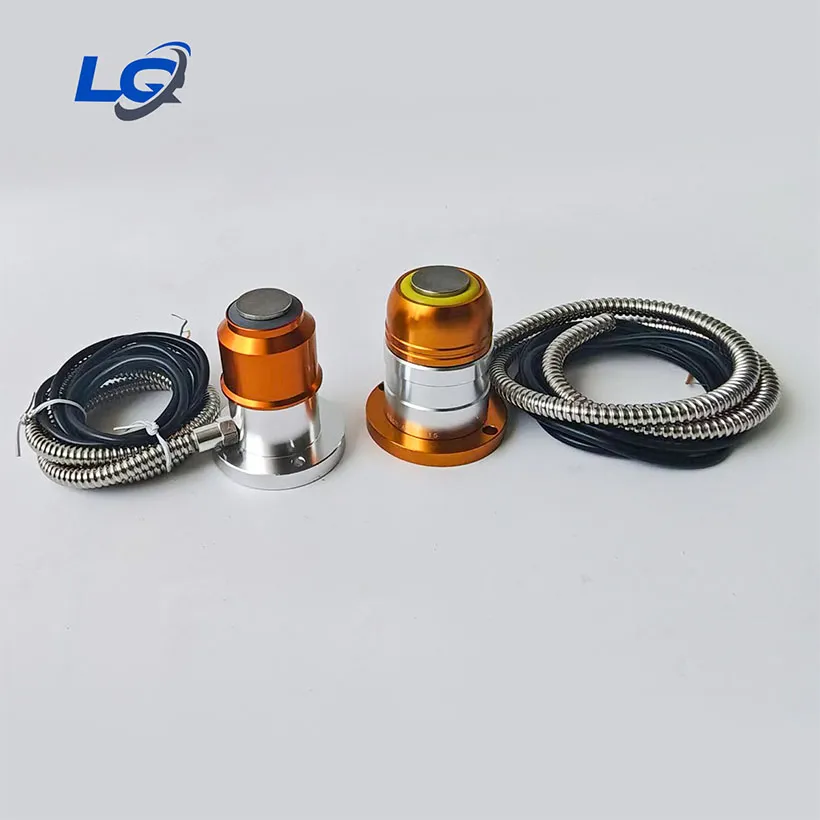
A régleur d'outils pour le travail du bois can be used on many types of woodworking equipment. It is not limited to one machine. In a mixed workshop, the same idea appears again and again: set the cutter, check the distance, lock the position, and cut with confidence.
On a table saw, you may use a setting gauge to set saw blade height, check fence distance, or repeat a previous cut. On a router table, you may set router bit height or confirm the distance between the bit and fence. On a drill press, you may check depth before boring repeated holes.
Parmi les applications courantes, on peut citer :
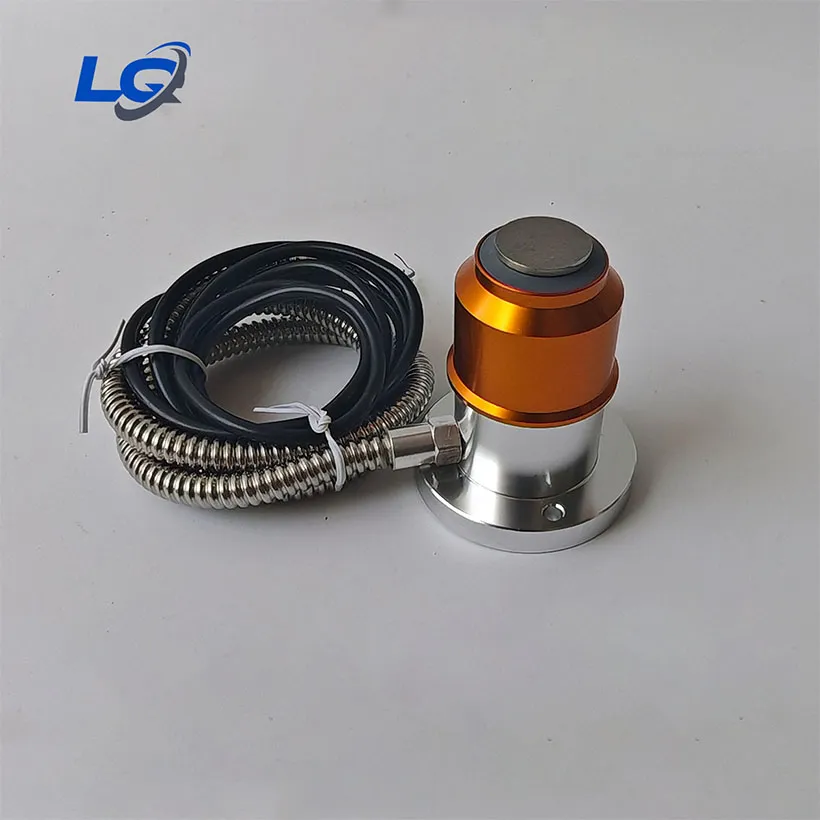
For a CNC router, tool setting is especially important because the machine follows programmed toolpaths. A Z-axis zero setter, also called a touch plate, is commonly used by CNC router users to set the Z reference before cutting.
A good régleur d'outils pour le travail du bois should be easy to read, reliable and accurate, strong enough for daily use, and simple enough for fast operation. Fancy features are not useful if the operator cannot trust the measurement.
Important features include:
For LONGQIAO content, the more important buying idea is not the brand name. It is the function: the product should be built for accuracy, easy to set, and suitable for consistent machine adjustments.
A special tool may look attractive online, but the best tool is the one your operator can use correctly every day.
Even with a good tool setter, mistakes can still happen. The most common problem is rushing. If the machine is not clean, the workpiece is not flat, or the gauge is sitting on dust, the reading may be wrong.
Another common mistake is ignoring the whole machine system. A perfect depth gauge will not fix a loose router bit, weak clamp, poor fence alignment, or worn bearing. Tool setting works best when the whole machine is clean, tight, and well maintained.
Avoid these problems:
A tool setter helps reduce guesswork, but it cannot replace safe machine practice. Always confirm that the cutter, clamp, fence, and workpiece are secure before cutting.
Tool setting affects cutting accuracy. But it is only one part of the full CNC motion system. A woodworking CNC router also needs stable motion parts, such as linear guides, ball screws, rack and pinion systems, stepper motors, servo motors, spindle motors, and drivers.
LONGQIAO / LQ is a China-based one-stop supplier of CNC machine parts for global OEMs, distributors, automation equipment integrators, trading companies, and woodworking machine builders. The website presents LONGQIAO as a supplier of linear guides, ball screws, servo and driver systems, rack and pinion, planetary gear reducers, and spindle motors for CNC and automation applications.
For woodworking CNC routers, LONGQIAO’s solution page focuses on stable product quality, consistent specifications, technical support, and long-term supply for OEM machine builders, system integrators, distributors, and end users. This fits the real needs of woodworking machine factories: parts must match, supply must be stable, and replacement must be fast.
Recommended LONGQIAO internal links:
For buyers, this one-stop sourcing model reduces communication cost. You can match the machine tool, motion components, and replacement parts with fewer supplier problems.
A régleur d'outils pour le travail du bois is used to set or check cutting height, depth, and tool position on machines such as routers, table saws, drills, and CNC routers. It helps reduce guesswork and improve repeatable setup.
Not always. A depth gauge measures depth or height. A tool setter is used to set tool position for cutting. Some tools can do both jobs, especially in woodworking machine setups.
Yes. A tool setter or setting gauge can help set router bit height and fence distance on a router table. It is useful for grooves, edge profiles, dado cuts, and repeat work.
CNC tool setting is important because the controller needs a correct tool reference. If the Z axis or tool length is wrong, the CNC router may cut too deep or not deep enough.
Common setup tools include a tool setter, depth gauge, combination square, miter gauge, clamp, jig, fixture, and measuring tools for saw blade, router bit, and fence setup.
Yes. LONGQIAO supplies CNC machine parts used in woodworking CNC routers and other machine systems, including linear guides, ball screws, servo and stepper systems, spindle motors, rack and pinion systems, and related motion components.