
Choosing the wrong motor system can cause poor accuracy, heat, vibration, and lost production time. The problem grows when buyers mix up a servo motor, servo drive, controller, and stepper motor. The solution is simple: understand each part before you buy.
A servo motor is the motion part that rotates and creates torque. A servo drive is the electronic unit that powers and controls the servo motor. The controller sends commands, the drive adjusts current and voltage, and the encoder gives feedback so the system can reach accurate speed, position, or torque.
A servomotore is a motor designed for controlled motion. In simple words, it helps a machine move to the right position, at the right speed, with the right torque. In a CNC machine, it may move the X, Y, or Z axis, rotate a tool changer, drive a feeding system, or control another moving part.
A servo motor is not only one fixed type of motor. It can be an AC servo motor, DC servo motor, brushless dc motor, or another electric motor used inside a closed-loop system. The key point is feedback. The motor receives a command, the encoder checks the real motor shaft position, and the system corrects the motion when needed.
At LONGQIAO, we often explain it this way: a normal motor gives movement, but a servo motor gives controlled movement. That is why servo motors are widely used in CNC routers, laser cutting machines, plasma cutting machines, automated production lines, 3D printers, and other industrial applications where stable positioning matters.
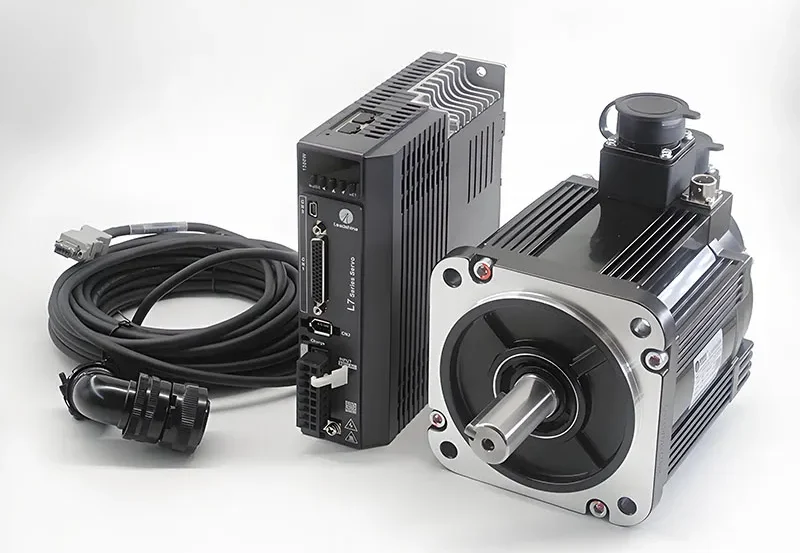
A servo drive is the power and control unit between the controller and the servo motor. The controller tells the system what to do. The servo drive turns that command into motor current. Then it checks feedback from the encoder and adjusts the output in real time.
The difference between a servo drive and a simple motor driver is the control depth. A basic motor driver may only drive the motor forward, backward, faster, or slower. A servo drive can regulate torque, speed, and position. It helps the motor respond smoothly when the load changes.
Think of the servo drive as the “muscle manager.” It does not create mechanical motion by itself, but without a servo drive, the servo motor cannot perform as a full closed-loop system. The drive and servo must match in voltage, current, encoder type, power rating, communication method, and application load.
Many buyers ask about servo motor vs DC motor because both can rotate and create power. A DC motor usually runs when voltage is applied. It is simple, common, and useful in many machines. But standard dc motors do not automatically know their exact position unless you add feedback and control.
A servo motor operates in a control loop. That means the system compares the command with the real position or speed. The encoder sends motor feedback. The servo drive adjusts motor current. This allows the servo motor to move with precise motion, not just basic rotation.
A brushed dc motor uses brushes and a commutator. A brushless dc motor uses electronic switching and usually has longer service life. A dc servo or dc servo motor can be based on brushed motor or brushless motor design, but it becomes a servo system when feedback and servo control are added.
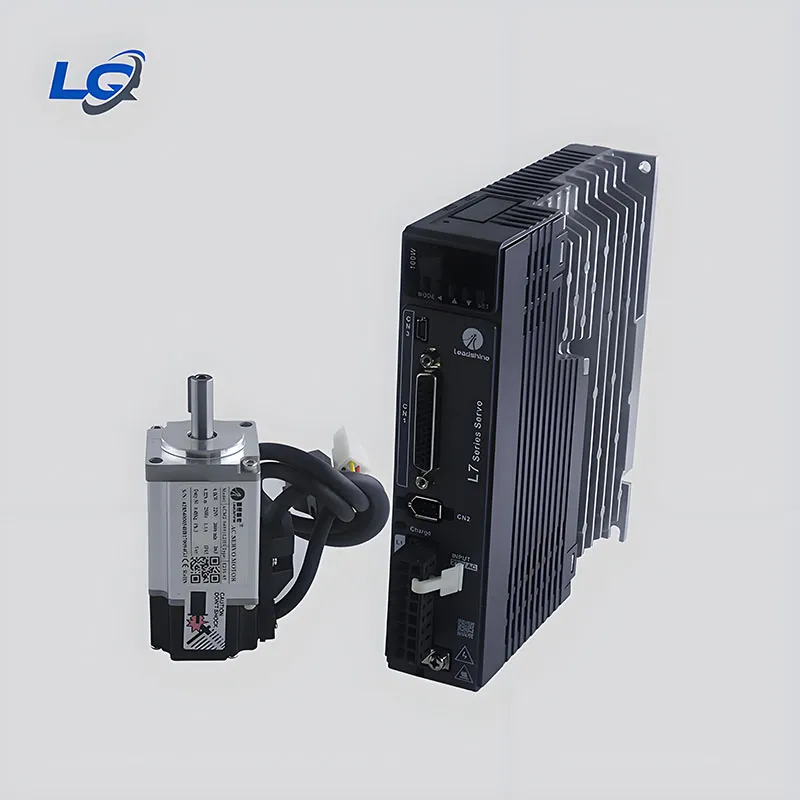
A stepper motor moves in small steps. It is popular because it is easy to use, cost-effective, and strong at low speed. Many desktop CNC machines, 3D printers, and light automation devices use a stepper system. A stepper motor may work well when the load is stable and the required speed is not too high.
A servomotore is usually better when the machine needs high speed, smoother response, stronger acceleration, or load correction. Compared to stepper systems, servo motors are often chosen for higher-end machines because they can use encoder feedback to correct position errors.
To understand how servo drives work, imagine a small conversation happening many times per second. The controller says, “Move here.” The servo drive says, “I will send power.” The encoder says, “Here is the real position.” Then the drive corrects the motor to move closer to the target.
This is called a servo loop. Inside the servo system, the drive checks position, speed, and motor current. The servo controller regulates the current based on the command and feedback. This allows the servo to reduce error and keep the movement stable.
A basic servo control flow looks like this:
Controller command
↓
Servo drive calculation
↓
Motor current output
↓
Rotation of the motor
↓
Encoder feedback
↓
Correction by the servo drive
This is why encoder matching is so important. A wrong encoder signal can cause alarm, shaking, wrong direction, unstable speed, or no movement. Before using servo drives, buyers should check encoder type, pulse resolution, cable quality, communication protocol, and wiring layout.
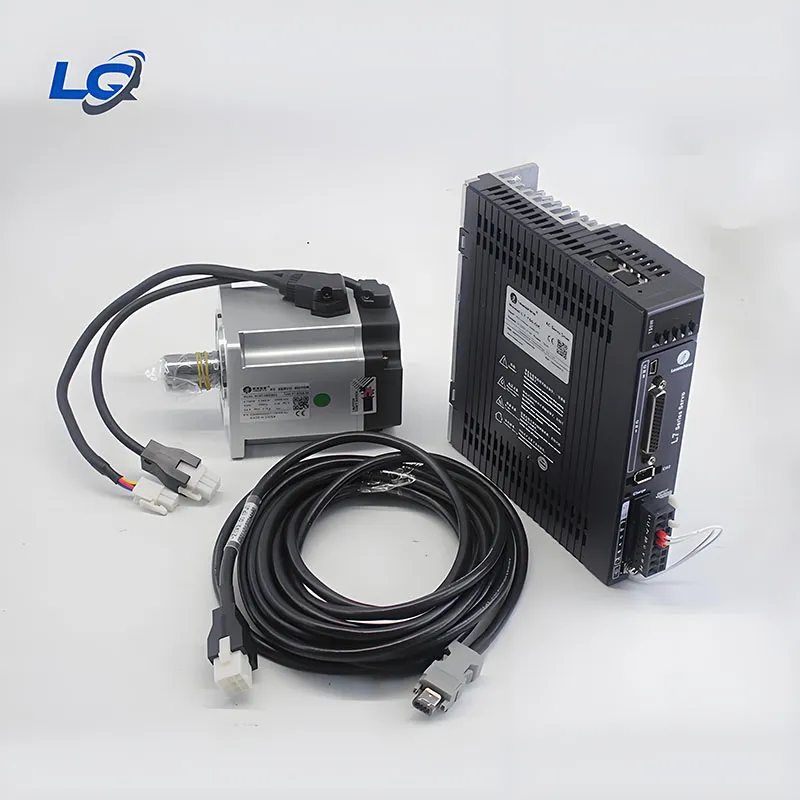
There are different types of servo drives for different systems. Some are made for AC power, some for DC power, and some for compact low-voltage equipment. In CNC and automation, common choices include AC servo drives, DC servo drives, pulse-control drives, analog-command drives, and fieldbus servo drives.
A type of servo system should match the controller and machine structure. For example, a small engraving machine may use a pulse-direction control method. A more advanced production line may use EtherCAT, CANopen, Modbus, or other communication methods to connect many axes.
Common servo drive control modes include:
For many applications, the most practical question is not “Which servo drive is best?” but “Which servo drive fits my controller, motor, load, and budget?” This is where a one-stop CNC parts supplier can reduce mistakes.
LONGQIAO / LQ is a China-based one-stop supplier of CNC machine parts for global buyers. We supply transmission and motion control components such as servo and driver solutions for CNC machines, linear guides, ball screws, stepper and servo systems, spindle motors, planetary gearboxes, and rack and pinion systems.
For overseas CNC machine OEMs, regional distributors, trading companies, automation integrators, and machine builders, the biggest challenge is not only price. It is supply stability. Buyers need parts that match, ship fast, and work together in real production. That is why LONGQIAO focuses on factory-direct supply, stable quality, in-stock availability, and integrated multi-component sourcing.
A typical CNC axis may need:
For buyers, this saves time. Instead of asking five suppliers for five different parts, you can source a matched package from one partner. That means fewer communication mistakes, faster quotation, easier replacement, and better after-sales support.
You should use a servo when the application needs higher speed, higher accuracy under changing load, faster response, or smoother motion. Servomotori offer better performance in demanding motion control applications, especially when the machine has heavy parts, long strokes, or frequent acceleration and deceleration.
A stepper is still useful when the application is simple, cost-sensitive, and predictable. Many buyers use stepper motors for small routers, desktop CNC machines, 3D printers, and light equipment. But for larger CNC routers, laser cutting machines, plasma machines, and automation lines, servo motors are generally a stronger choice.
Use a servo if your machine has these signs:
In these cases, a servo motor is a specialized motor system that helps the machine respond better and protect production quality.
A servo motor creates mechanical movement. A servo driver, also called a servo drive, supplies controlled power to the motor. The drive reads feedback and adjusts current, speed, torque, or position. The motor moves; the drive controls the movement.
Not exactly. A motor controller is a broader term. It may control many types of motors. A servo drive is a specific control device for a servo system. In many systems, the controller sends commands and the servo drive powers the motor.
In most practical CNC and automation systems, no. A servo motor needs a matched servo drive to run correctly as a closed-loop system. Without the correct drive, the motor may not start, may alarm, or may run unstably.
A servo motor can be AC or DC. Some systems use an AC servo motor. Others use a DC servo motor, brushless dc servo motor, or brushed motor design. The important point is not only AC or DC, but whether the motor, drive, encoder, and controller are matched.
Servo motors are often better for high speed, changing load, and precise motion control. Stepper motors are often better for lower-cost, simpler machines. The best choice depends on speed, torque, accuracy, budget, and machine structure.
Start with load, speed, torque, axis travel, transmission type, controller signal, and working duty. Then choose a matched servo motor and servo drive. For CNC machines, also check the linear guide, ball screw, rack and pinion, gearbox, and spindle system.